GEO Content Brief-to-Publish QA: ship useful pages without gaps
A strong brief only creates value when the published page keeps its promise, proves its claims and gives the reader a useful next step.
ViziGEO Team4 min read
Key takeaways
How to quality-check a GEO content brief before and after publication.
This QA compares the finished page with the approved brief. It is not the gate that approves the brief, and it is not a general scorecard for every page on the site.
Freeze the primary query, audience, page job, canonical URL and success metric in the brief.
A tutorial should show its workflow and visual summary in the page body, not hide the entire answer in metadata or an image.
QA cannot guarantee ranking or traffic.
Contents
What this workflow is for
How to quality-check a GEO content brief before and after publication.
A strong brief only creates value when the published page keeps its promise, proves its claims and gives the reader a useful next step.
This QA compares the finished page with the approved brief. It is not the gate that approves the brief, and it is not a general scorecard for every page on the site.
How to run it
Freeze the primary query, audience, page job, canonical URL and success metric in the brief.
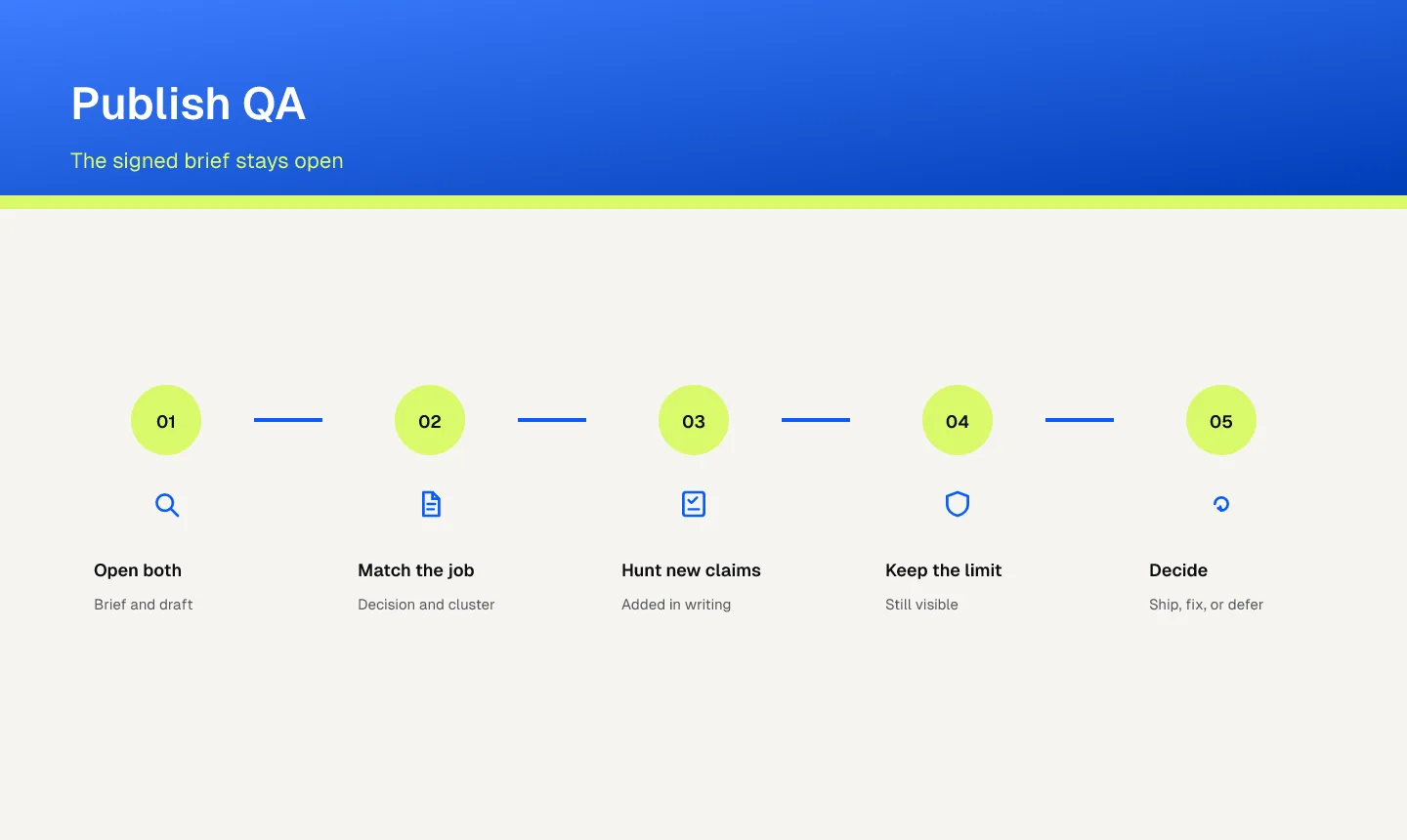
Open the signed brief beside the draft. Check the reader decision, the query cluster and the promised evidence.
Check that H1-H4, paragraphs, tables, examples and FAQs answer the same intent without filler.
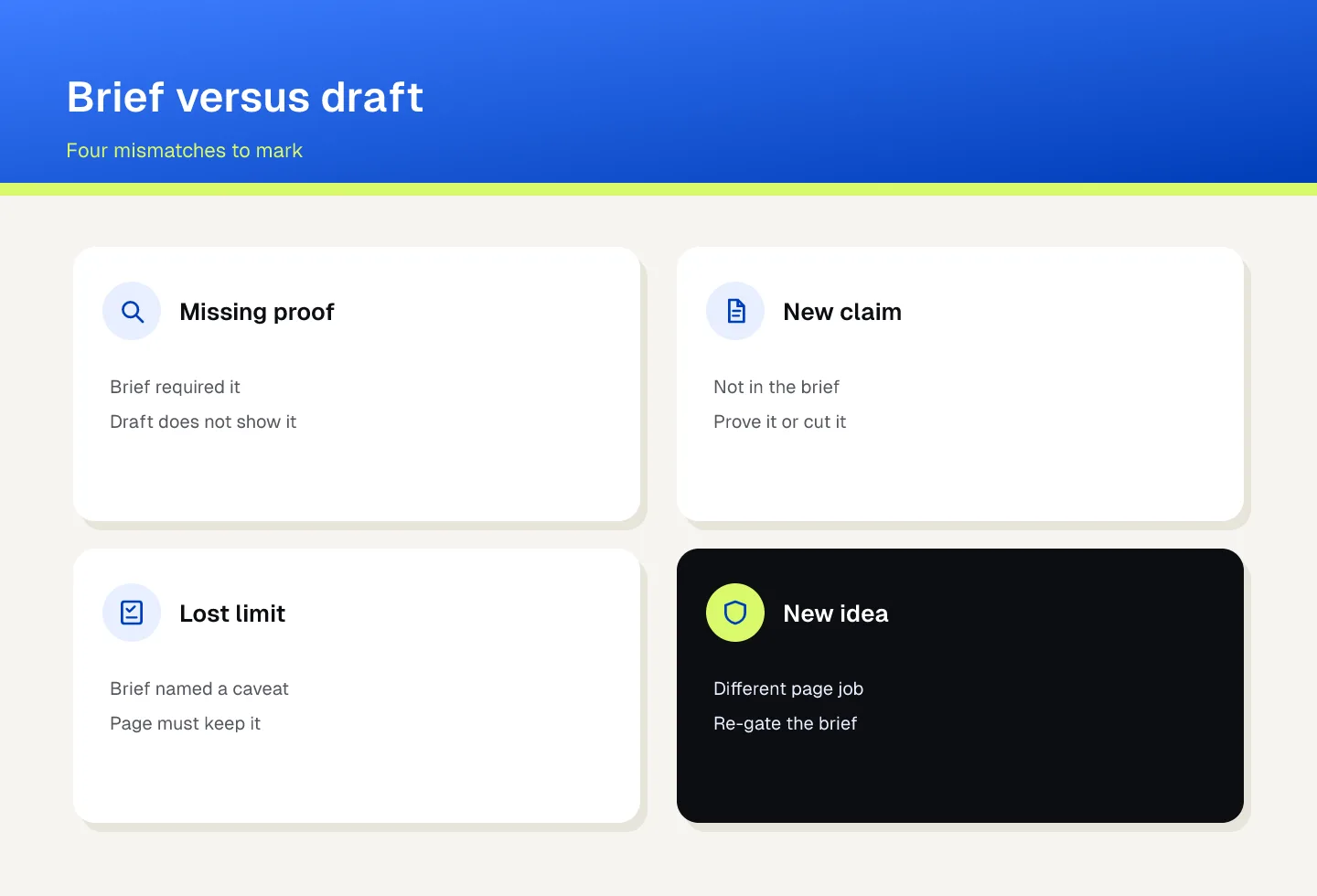
Mark claims that appeared during writing and were not in the brief. They need proof or they come out.
Verify every material claim, image, infographic, source, author, date and schema node against visible content.
Check title, H1, examples, sources, schema and the CTA against the brief, not against a new idea.
Test internal links, language alternates, title, description, OG data, accessibility and CTA events in the rendered page.
Confirm the limitation from the brief is still visible on the page.
After deployment, inspect the live URL, sitemap entry and Search Console evidence, then log fixes and ownership.
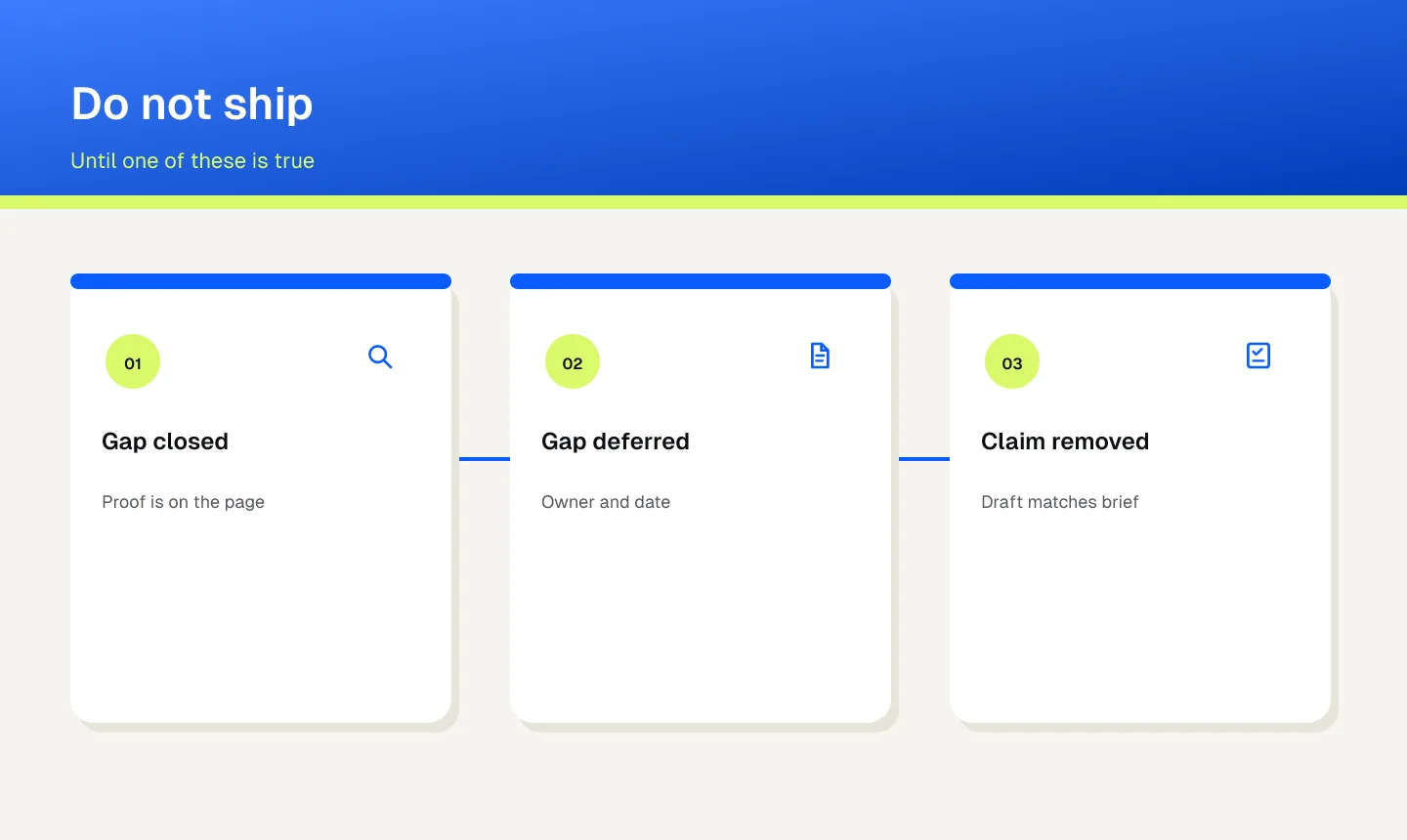
Ship only when the gaps are closed or explicitly deferred with an owner.
This QA compares the finished page with the approved brief. It is not the gate that approves the brief, and it is not a general scorecard for every page on the site.
What a finished pass looks like
A tutorial should show its workflow and visual summary in the page body, not hide the entire answer in metadata or an image.
What to keep in the record
Signed brief used for the check
Claims added after the brief
Gaps closed or deferred
Publish decision and owner
Open the signed brief beside the draft. Check the reader decision, the query cluster and the promised evidence.
Limits that change the conclusion
QA cannot guarantee ranking or traffic.
A valid brief may still meet the wrong market need.
Live rendering can differ from preview output.
A tutorial should show its workflow and visual summary in the page body, not hide the entire answer in metadata or an image.
Frequently asked questions
What if the draft is better than the brief?
Update the brief and pass the gate again, or cut the new claim. Do not quietly expand the job at publish time.
Is this the same as a quality scorecard?
No. The scorecard reviews a page against publishing standards. This QA checks fidelity to one approved brief.
Can we publish with a known evidence gap?
Only if the gap is visible, owned and deferred. A hidden gap is a failed QA.
Sources
These are the official references for the part of the workflow they govern. A documented process is not a ranking or citation result.
Open ViziGEO and review a documented sample of questions, mentions, recommendations and citations. The audit records what was observed. It does not guarantee a mention, a citation or a recommendation.