GEO Content Update Priority Score: choose the next refresh that matters
A refresh queue should reflect user value and evidence risk, not whoever asks first. A transparent score helps the team choose the next page and explain why.
ViziGEO Team3 min read
Key takeaways
How to prioritize GEO content updates with a reviewable scoring model.
The score chooses the next refresh. It does not predict ranking and it does not replace a legal or technical blocker. The calendar then schedules the URLs you picked.
Collect page impressions, query groups, click quality, citations, conversions, freshness, evidence risk and business value.
A page with rising impressions, stale pricing evidence and a signup CTA can outrank a low-demand page with a cosmetic title issue.
Scores guide decisions; they do not predict ranking.
Contents
What this workflow is for
How to prioritize GEO content updates with a reviewable scoring model.
A refresh queue should reflect user value and evidence risk, not whoever asks first. A transparent score helps the team choose the next page and explain why.
The score chooses the next refresh. It does not predict ranking and it does not replace a legal or technical blocker. The calendar then schedules the URLs you picked.
How to run it
Collect page impressions, query groups, click quality, citations, conversions, freshness, evidence risk and business value.
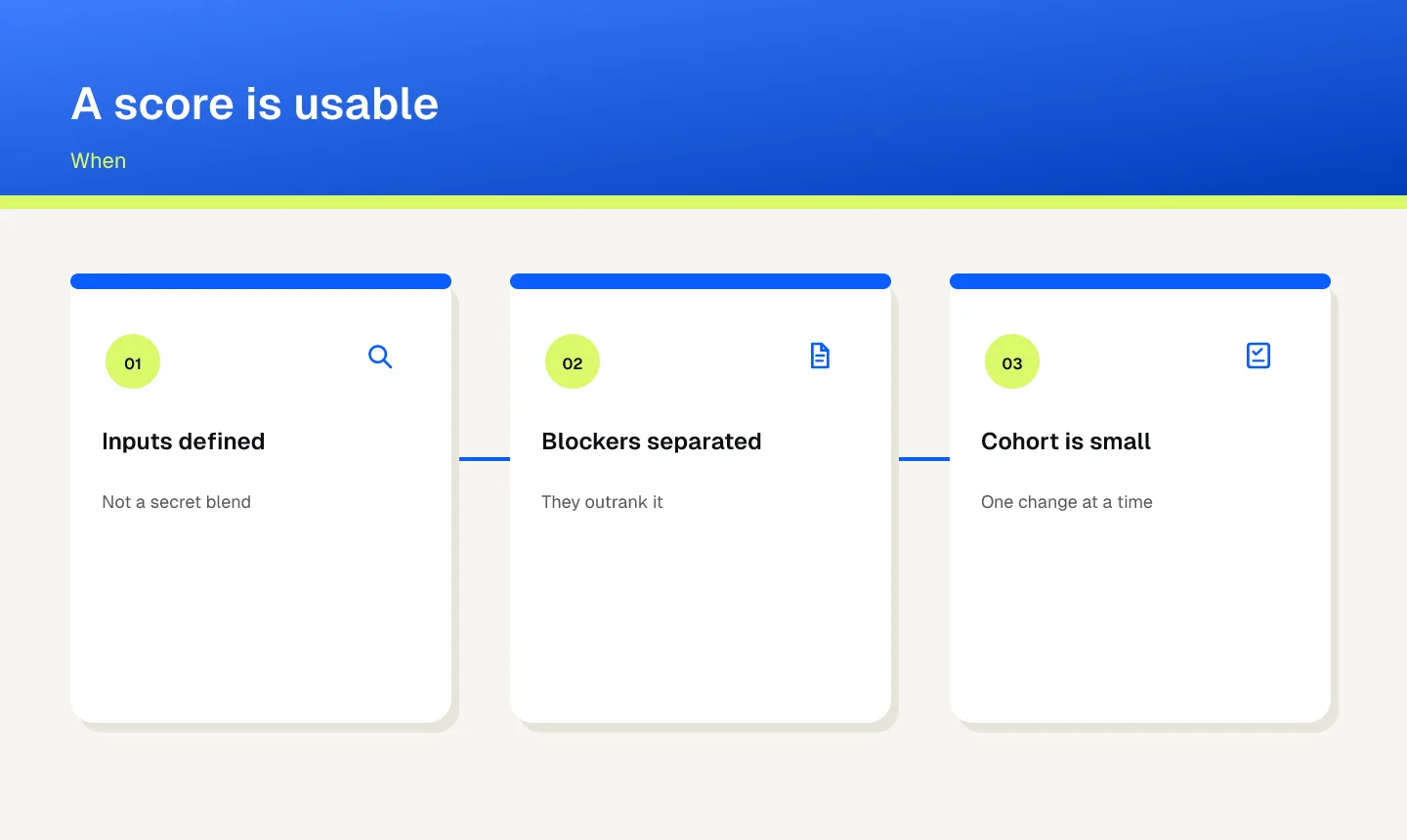
Collect impressions, query groups, citations, conversions, freshness and evidence risk. Write down what each input means.
Set a simple documented scale and separate urgency from expected impact and implementation effort.
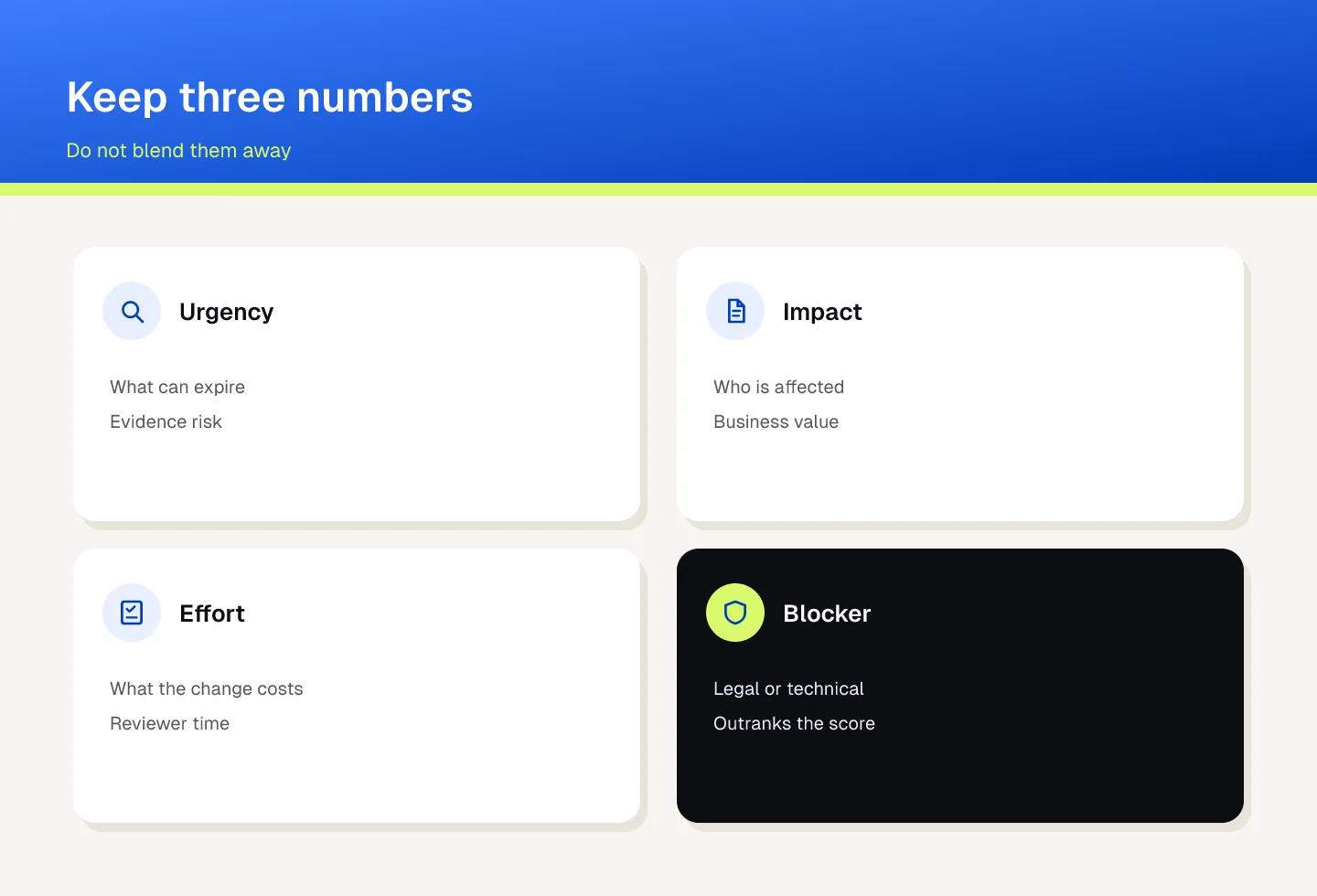
Separate urgency, expected impact and effort. One blended number hides the trade.
Add penalties for duplicate intent, unsupported claims, poor UX, missing language coverage or unresolved technical blockers.
Penalize duplicate intent, unsupported claims and unresolved technical blockers instead of scoring over them.
Select a small cohort, record the baseline and make one evidence-bearing change at a time.
Select a small cohort and change one evidence-bearing thing at a time.
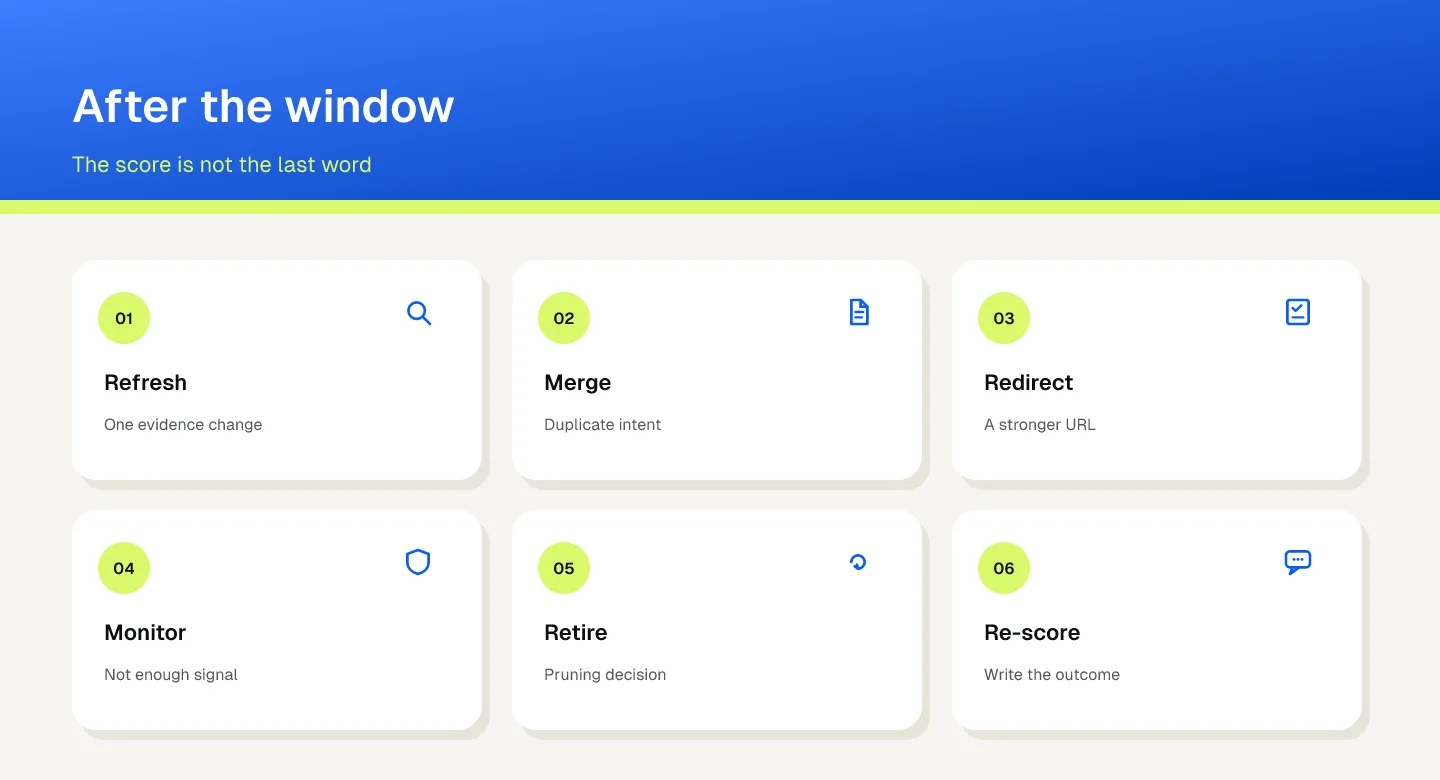
Re-score after the observation window and keep a decision log of refresh, merge, redirect, monitor or retire.
Re-score after the observation window and log whether you refreshed, merged, redirected, monitored or retired the URL.
The score chooses the next refresh. It does not predict ranking and it does not replace a legal or technical blocker. The calendar then schedules the URLs you picked.
What a finished pass looks like
A page with rising impressions, stale pricing evidence and a signup CTA can outrank a low-demand page with a cosmetic title issue.
What to keep in the record
Inputs and what each one means
Urgency, impact and effort kept separate
Blockers that outrank the score
Decision after the window
Collect impressions, query groups, citations, conversions, freshness and evidence risk. Write down what each input means.
Limits that change the conclusion
Scores guide decisions; they do not predict ranking.
Inputs can be biased or incomplete.
Do not use one score to hide legal or technical blockers.
A page with rising impressions, stale pricing evidence and a signup CTA can outrank a low-demand page with a cosmetic title issue.
Frequently asked questions
Does a high score predict ranking?
No. Scores guide the queue. They do not predict ranking.
Can one score hide a legal or technical block?
No. Do not use the score to hide those blockers. They outrank the number.
How is this different from the calendar?
The score chooses which URLs matter next. The calendar assigns the review date for the ones you selected.
Sources
These are the official references for the part of the workflow they govern. A documented process is not a ranking or citation result.
Open ViziGEO and review a documented sample of questions, mentions, recommendations and citations. The audit records what was observed. It does not guarantee a mention, a citation or a recommendation.