Tutorials · English
Skyscraper editorial format · verified 4 November 2026
AI citation tracking spreadsheet: keep answer evidence consistent
A spreadsheet is useful when it preserves one observation per row and makes the collection scope explicit. Avoid mixing raw evidence with interpretation in the same field.
Key takeaways
How to structure a spreadsheet for repeatable AI citation tracking.
- How to structure a spreadsheet for repeatable AI citation tracking.
- Create columns for question ID, intent, system, market, language, date and run ID.
- Summarise by intent and period, but retain the row-level evidence for review.
- A row can show that a methodology page was cited for a definition question without turning that row into a ranking claim.
- A spreadsheet does not make collection unbiased.
How to structure a spreadsheet for repeatable AI citation tracking.
- 1Create columns for question ID, intent, system, market, language, date and run ID.
- 2Store the answer claim, citation URL, domain, page type and citation position separately.
- 3Add reviewer status, evidence confidence, competitor flag and linked action page.
- 4Lock definitions and use controlled values so repeated runs remain comparable.
- 5Summarise by intent and period, but retain the row-level evidence for review.
A row can show that a methodology page was cited for a definition question without turning that row into a ranking claim.
Limits
- A spreadsheet does not make collection unbiased.
- Manual transcription needs quality control.
- Do not store personal or sensitive prompt data unnecessarily.
How to interpret the result
AI citation tracking spreadsheet: keep answer evidence consistent. This is a decision workflow, not a checklist of isolated settings. Read each observation against the original question, the public output and the expected user or crawler behaviour.
Interpret the observation in context
How to structure a spreadsheet for repeatable AI citation tracking. Start with the exact scope, then compare the observed value with the expected value. A green status can confirm one technical observation while leaving indexation, ranking or conversion unanswered.
Context before conclusion
A row can show that a methodology page was cited for a definition question without turning that row into a ranking claim.
A practical operating note
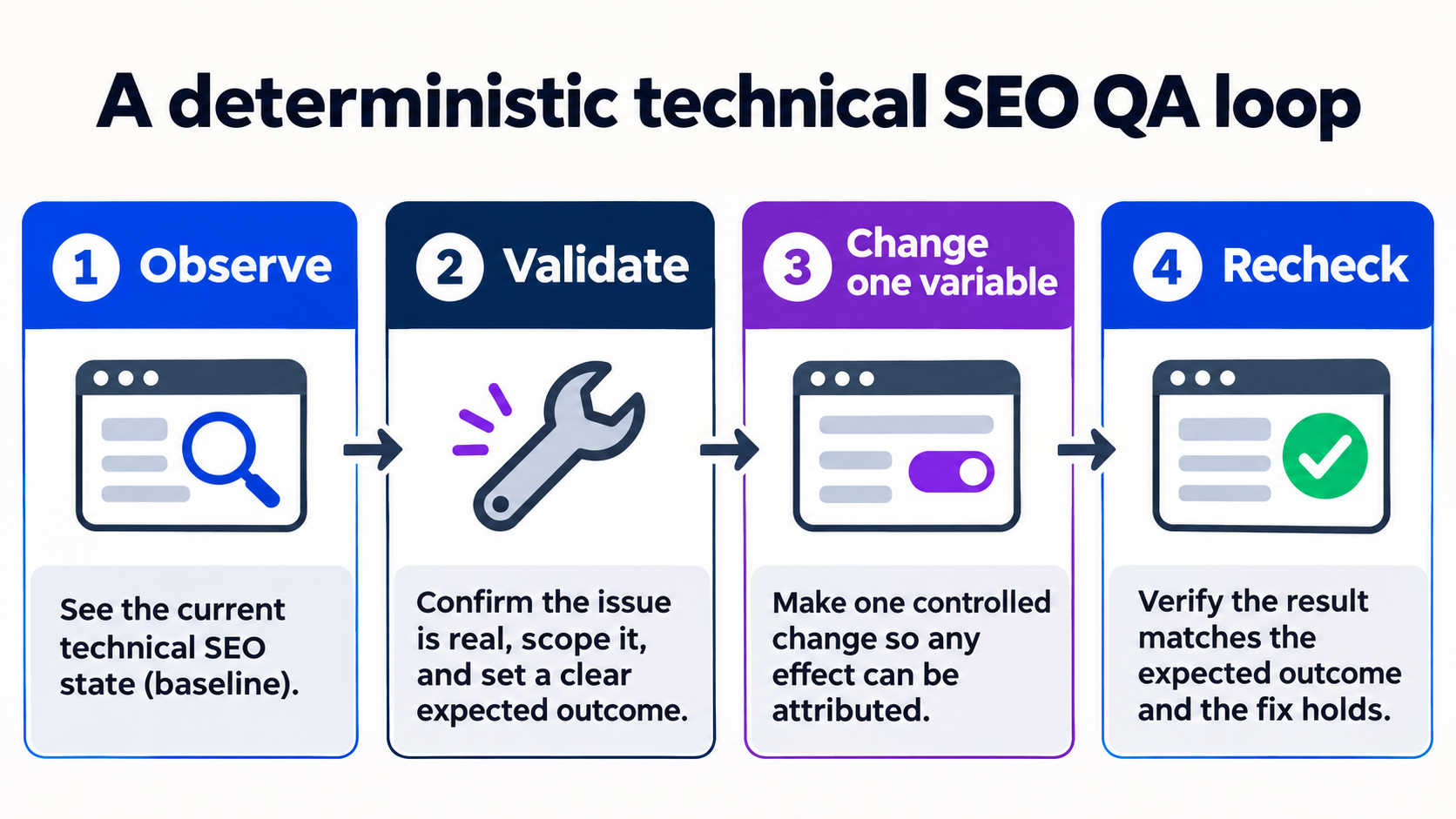
Use this as a decision record: define the question, inspect the live output, make one controlled change, and recheck the same evidence. That sequence keeps diagnosis separate from assumptions. Make the smallest reversible change possible and keep the previous value. This protects the page from accidental regressions and gives another specialist enough context to reproduce the review.
Quality gate
A spreadsheet does not make collection unbiased.
What to measure next
Record the exact URL or property, the date, the tool state and the visible output. Repeat the same check after the change and compare like-for-like values instead of relying on a single screenshot.
Next observation
Summarise by intent and period, but retain the row-level evidence for review. Keep the result separate from traffic, ranking and revenue claims until those outcomes are measured in their own systems.
The step-by-step workflow
Use this as a decision record: define the question, inspect the live output, make one controlled change, and recheck the same evidence. That sequence keeps diagnosis separate from assumptions.
Create columns for question ID, intent, system, market, language, date and run ID.
Why it matters
Start by writing down the exact question and scope. A precise question prevents the workflow from drifting into unrelated checks.
Store the answer claim, citation URL, domain, page type and citation position separately.
Why it matters
Validate the live output before editing anything. This creates a baseline and separates a real defect from a reporting delay.
Add reviewer status, evidence confidence, competitor flag and linked action page.
Why it matters
Check the surrounding signals that can explain the observation. Compare like-for-like values instead of relying on one screenshot or status label.
Lock definitions and use controlled values so repeated runs remain comparable.
Why it matters
Change one variable at a time and record what changed. Controlled changes make the next observation attributable and reversible.
Summarise by intent and period, but retain the row-level evidence for review.
Why it matters
Recheck the same evidence after the change. Record the timestamp and outcome so the result can be reviewed later.
Intent
Evidence
Controlled change
Recheck
Evidence and implementation notes
A row can show that a methodology page was cited for a definition question without turning that row into a ranking claim.
Capture the exact URL or property, timestamp, expected state and observed result. Keeping those fields together makes the work reproducible and easier to hand off.
intent: How to structure a spreadsheet for repeatable AI citation tracking.
language: en
evidence: official-tool workflow + local QA
status: reviewable tutorial| Check | What to capture | Why it matters |
|---|---|---|
| 1. Create columns for question ID, intent, system, market, language, date and run ID. | Exact value, URL, timestamp and visible status. | Preserves a reviewable baseline before and after a change. |
| 2. Store the answer claim, citation URL, domain, page type and citation position separately. | Exact value, URL, timestamp and visible status. | Preserves a reviewable baseline before and after a change. |
| 3. Add reviewer status, evidence confidence, competitor flag and linked action page. | Exact value, URL, timestamp and visible status. | Preserves a reviewable baseline before and after a change. |
| 4. Lock definitions and use controlled values so repeated runs remain comparable. | Exact value, URL, timestamp and visible status. | Preserves a reviewable baseline before and after a change. |
| 5. Summarise by intent and period, but retain the row-level evidence for review. | Exact value, URL, timestamp and visible status. | Preserves a reviewable baseline before and after a change. |
Common mistakes to avoid
The most expensive errors come from changing several variables at once or treating a tool status as a business outcome. Use each limitation below as a quality gate before publishing a conclusion.
1. Quality gate
A spreadsheet does not make collection unbiased.
2. Quality gate
Manual transcription needs quality control.
3. Quality gate
Do not store personal or sensitive prompt data unnecessarily.
Frequently asked questions
What is the fastest safe way to start?
Use this as a decision record: define the question, inspect the live output, make one controlled change, and recheck the same evidence. That sequence keeps diagnosis separate from assumptions. Create columns for question ID, intent, system, market, language, date and run ID.
Does a successful check guarantee a business result?
A row can show that a methodology page was cited for a definition question without turning that row into a ranking claim. A spreadsheet does not make collection unbiased.
What should I record for a repeatable review?
Capture the exact URL or property, timestamp, expected state and observed result. Keeping those fields together makes the work reproducible and easier to hand off. Summarise by intent and period, but retain the row-level evidence for review.
Talk to an expert
Want this workflow applied to your site? Talk to a ViziGEO expert for a practical next step and a reviewable evidence baseline.