AI Search Content Refresh SOP: update evidence without losing intent
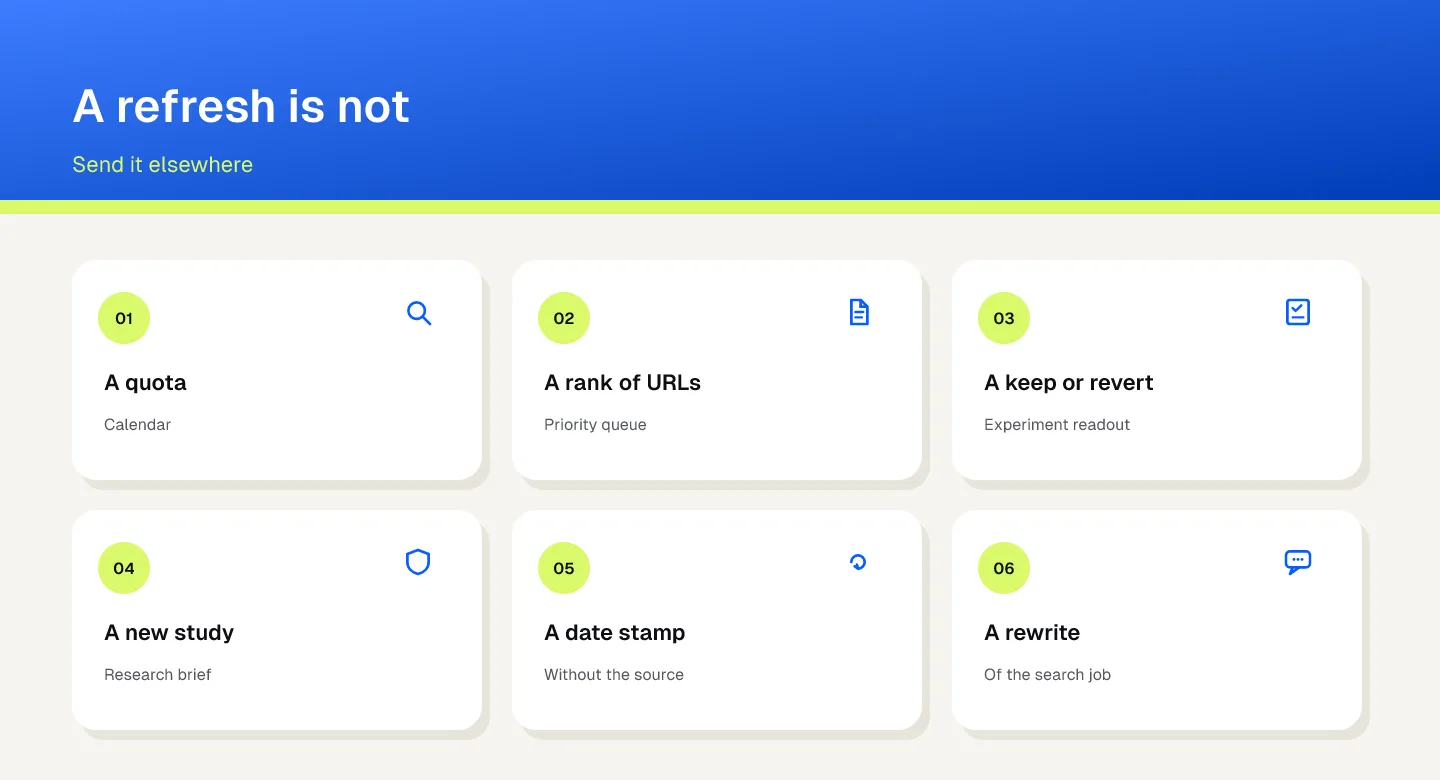
Refreshing content is not changing a date. A useful SOP protects the original search job while improving evidence, clarity and measurable next actions.
ViziGEO Team3 min read
Key takeaways
How to run a controlled AI search and GEO content refresh.
This SOP updates one page without changing the search job it already owns. A calendar chooses which URLs are due. A priority queue ranks repair work. Here you protect the original task and replace only the weak evidence.
Select a page using demand, evidence risk, conversions, citations, freshness and business value.
A stale integration tutorial may need a new screenshot, version note and validation step, not a rewritten introduction that changes the query job.
Refreshes can hurt a page if intent drifts.
Contents
What this workflow decides
How to run a controlled AI search and GEO content refresh.
Refreshing content is not changing a date. A useful SOP protects the original search job while improving evidence, clarity and measurable next actions.
This SOP updates one page without changing the search job it already owns. A calendar chooses which URLs are due. A priority queue ranks repair work. Here you protect the original task and replace only the weak evidence.
How to do it
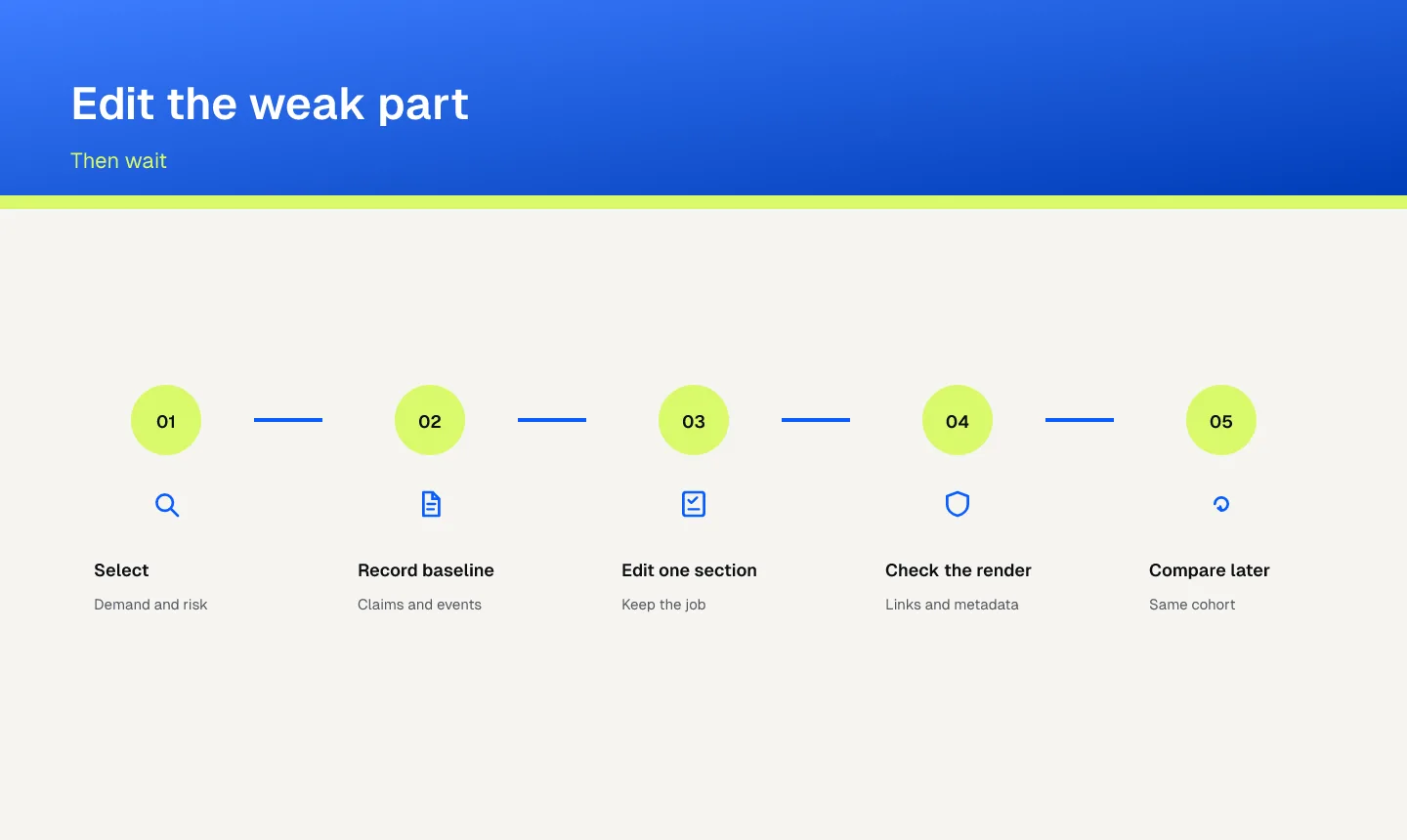
Select a page using demand, evidence risk, conversions, citations, freshness and business value.
Pick the page from demand and evidence risk, not from a weekly quota.
Record the baseline query cohort, headings, claims, sources, links, schema, CTA and analytics events.
Write the baseline headings, claims, sources and events before you edit.
Update only the sections that need stronger evidence, clearer structure, better UX or corrected intent.
Change the section that is wrong. Leave the query job alone.
Run language, accessibility, structured-data, internal-link and rendered metadata QA before release.
Check language, rendered metadata and internal links before release.
Annotate the release and compare recrawl, impressions, CTR, engagement, citations and qualified outcomes.
Annotate the release and compare the same cohort later. One day is not a result.
This SOP updates one page without changing the search job it already owns. A calendar chooses which URLs are due. A priority queue ranks repair work. Here you protect the original task and replace only the weak evidence.
What a finished record looks like
A stale integration tutorial may need a new screenshot, version note and validation step, not a rewritten introduction that changes the query job.
What to keep in the record
Why this page was selected
Baseline headings, claims and events
Sections changed and sections left
Same cohort after the reporting delay
Pick the page from demand and evidence risk, not from a weekly quota.
What changes the conclusion
Refreshes can hurt a page if intent drifts.
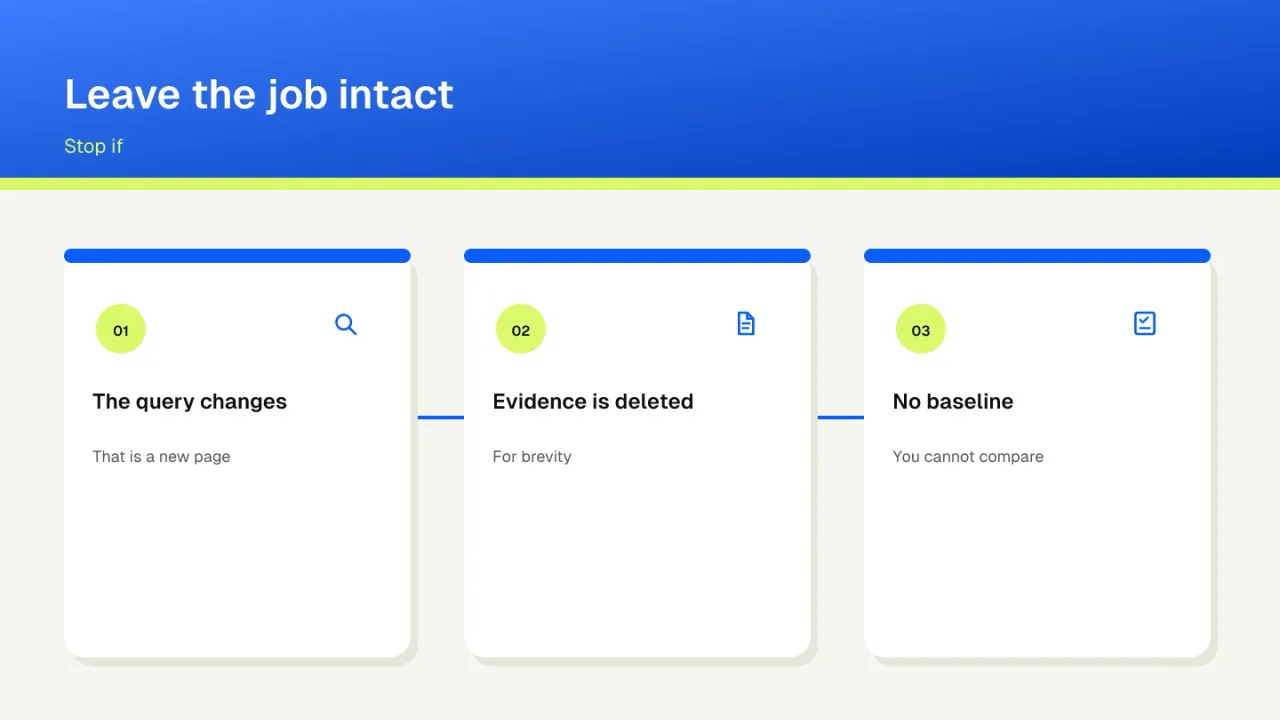
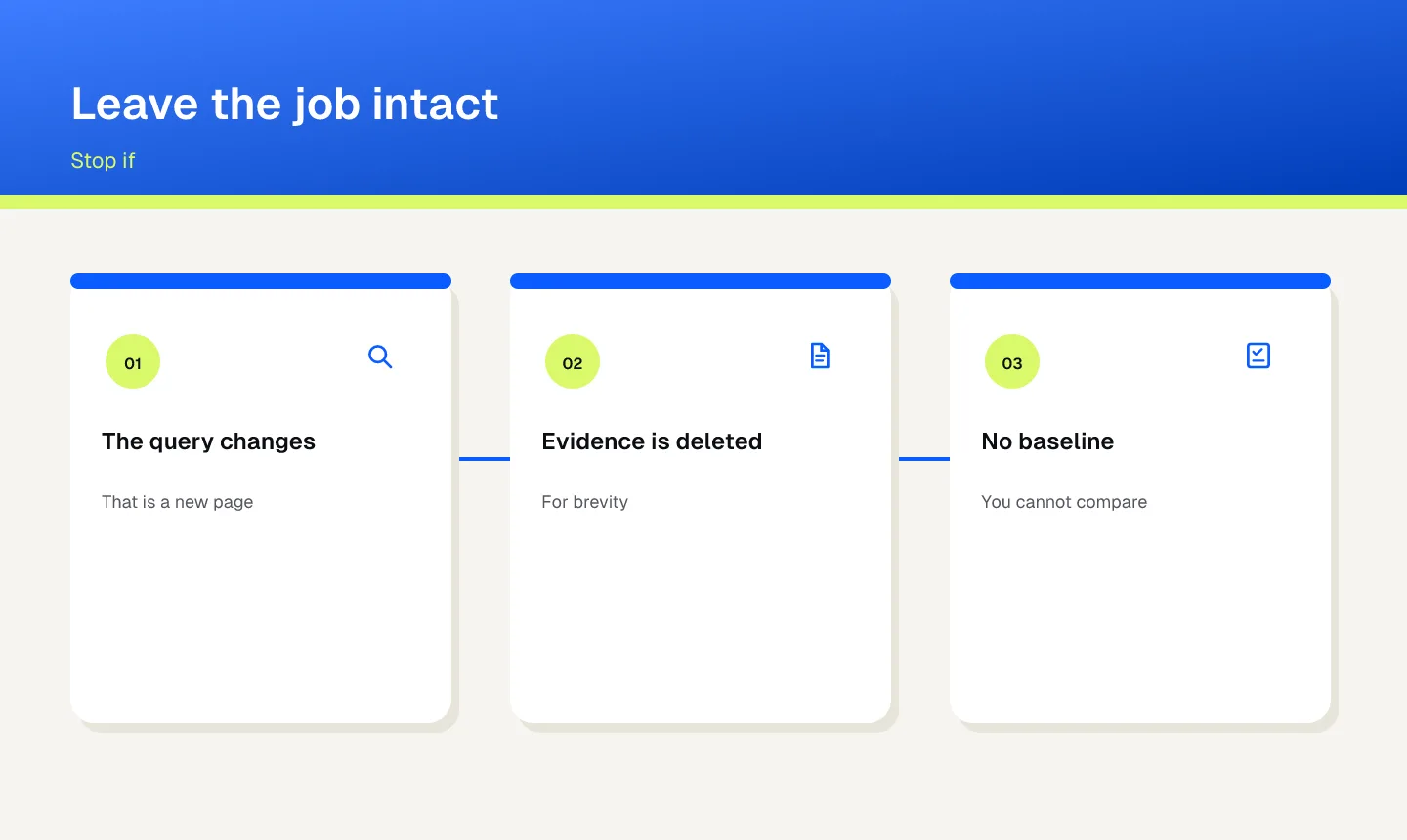
Do not remove useful evidence for brevity.
Observed gains need enough time and comparable cohorts.
A stale integration tutorial may need a new screenshot, version note and validation step, not a rewritten introduction that changes the query job.
Frequently asked questions
Is a new date a refresh?
No. A new date without a checked source is cosmetic.
Should the introduction be rewritten to sound fresher?
Not if that changes the query the page already answers.
Who decides the page is next?
The priority queue. This SOP is the controlled edit once the page is chosen.
Sources
These are the official sources for the part of the workflow they govern. A documented workflow is not a ranking or a citation outcome.
Open ViziGEO and review a documented sample of questions, mentions, recommendations and citations. The audit records what was observed. It does not guarantee a mention, a citation or a recommendation.