Search Console URL Priority Queue: focus indexing work on value
When hundreds of URLs need attention, resubmitting everything is not a strategy. A priority queue connects Search Console evidence to the next technical or editorial action.
ViziGEO Team3 min read
Key takeaways
How to prioritize URL indexing and SEO fixes with Search Console evidence.
This queue ranks the next URL to repair using Search Console evidence: demand, index state, canonical and effort. An editorial priority score ranks a content refresh. An indexation log records what a release did. Here you choose the next fix.
Export candidate URLs with impressions, clicks, position, index state, canonical, last modification and conversion signals.
A page with rising impressions and a canonical conflict should outrank a new low-demand page with no observed query signal.
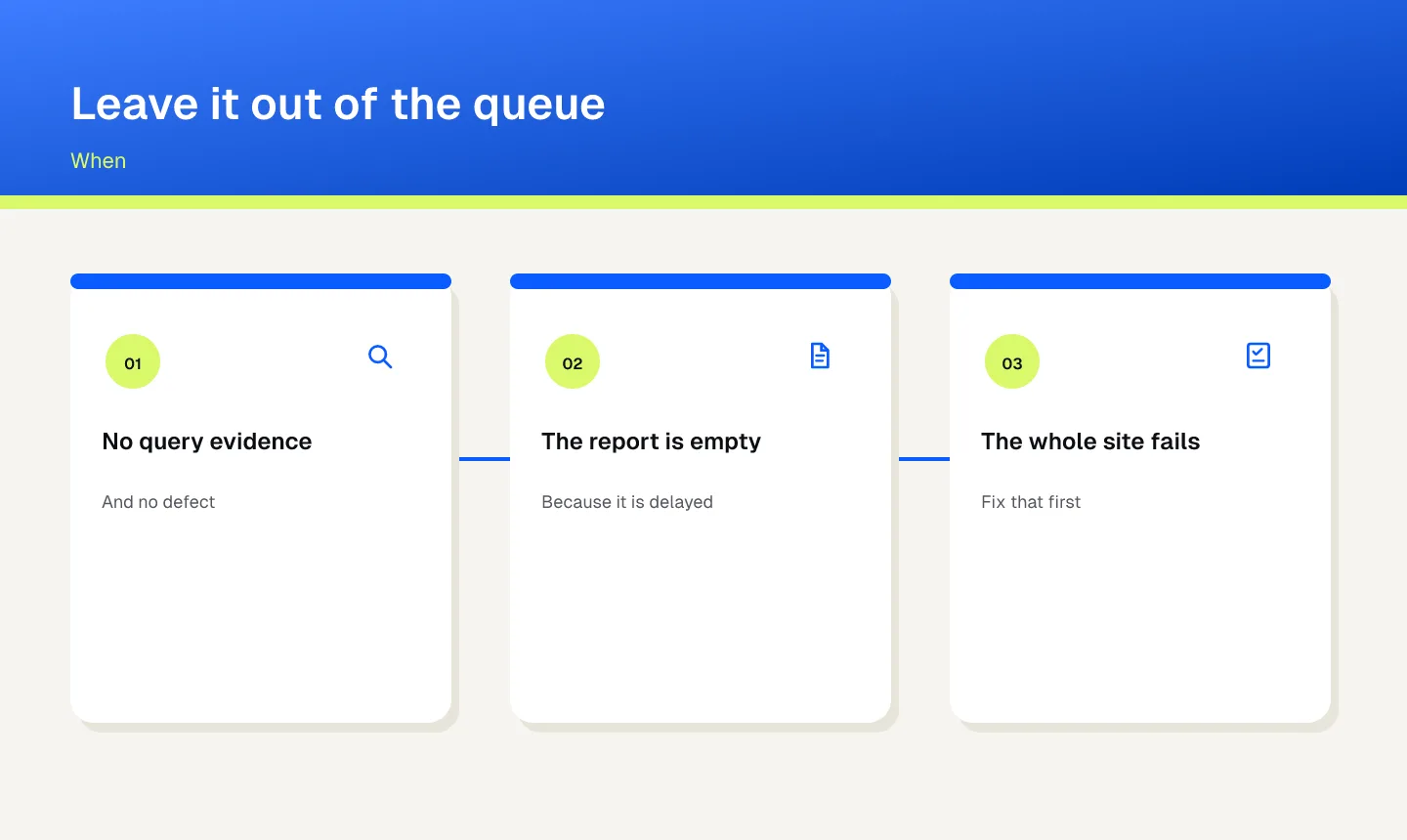
Search Console data is delayed and incomplete.
Contents
What this workflow decides
How to prioritize URL indexing and SEO fixes with Search Console evidence.
When hundreds of URLs need attention, resubmitting everything is not a strategy. A priority queue connects Search Console evidence to the next technical or editorial action.
This queue ranks the next URL to repair using Search Console evidence: demand, index state, canonical and effort. An editorial priority score ranks a content refresh. An indexation log records what a release did. Here you choose the next fix.
How to do it
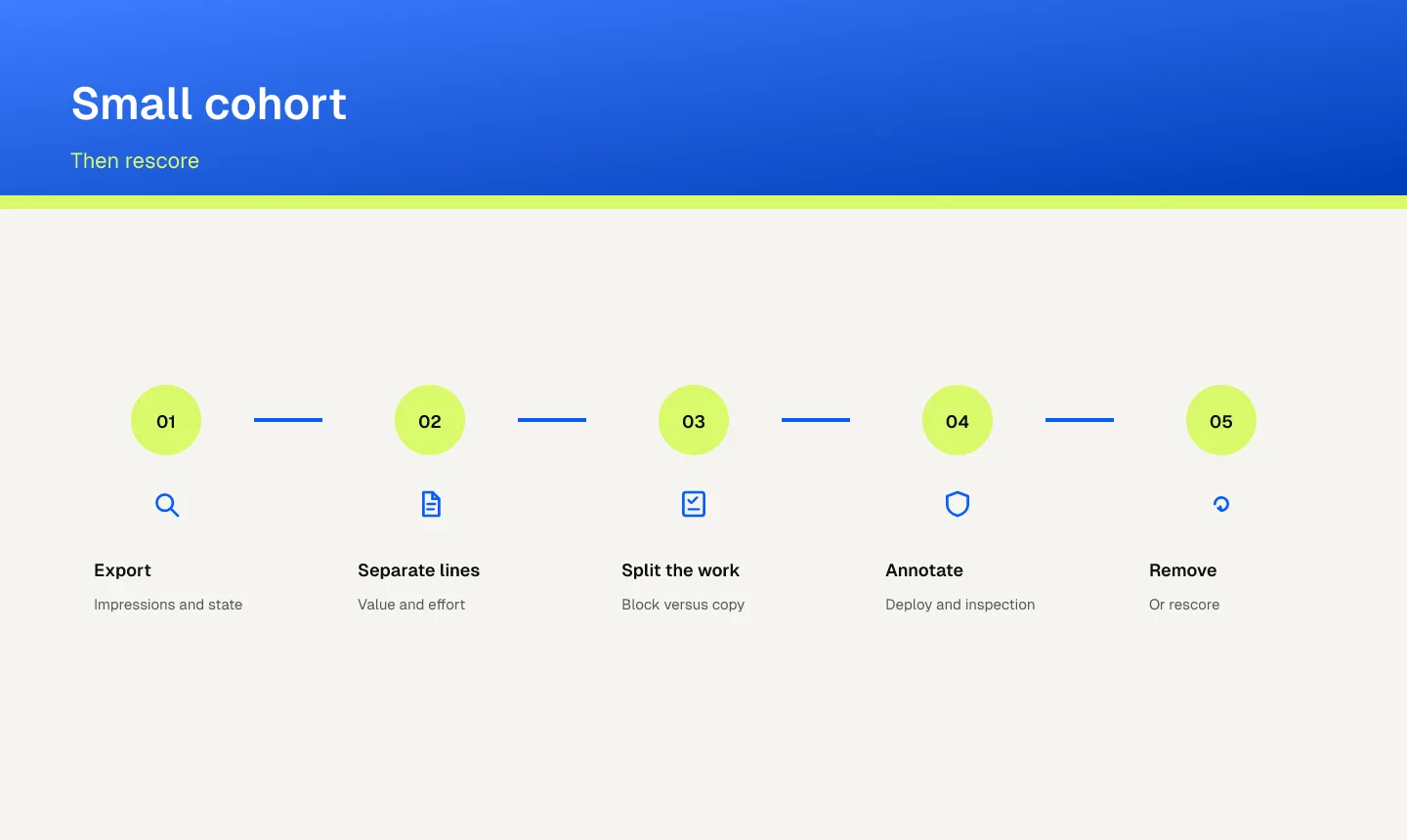
Export candidate URLs with impressions, clicks, position, index state, canonical, last modification and conversion signals.
Export the candidate URLs with impressions, clicks, index state and canonical. Do not start from a wish list.
Score each URL for business value, search demand, defect severity, freshness risk and effort to repair.
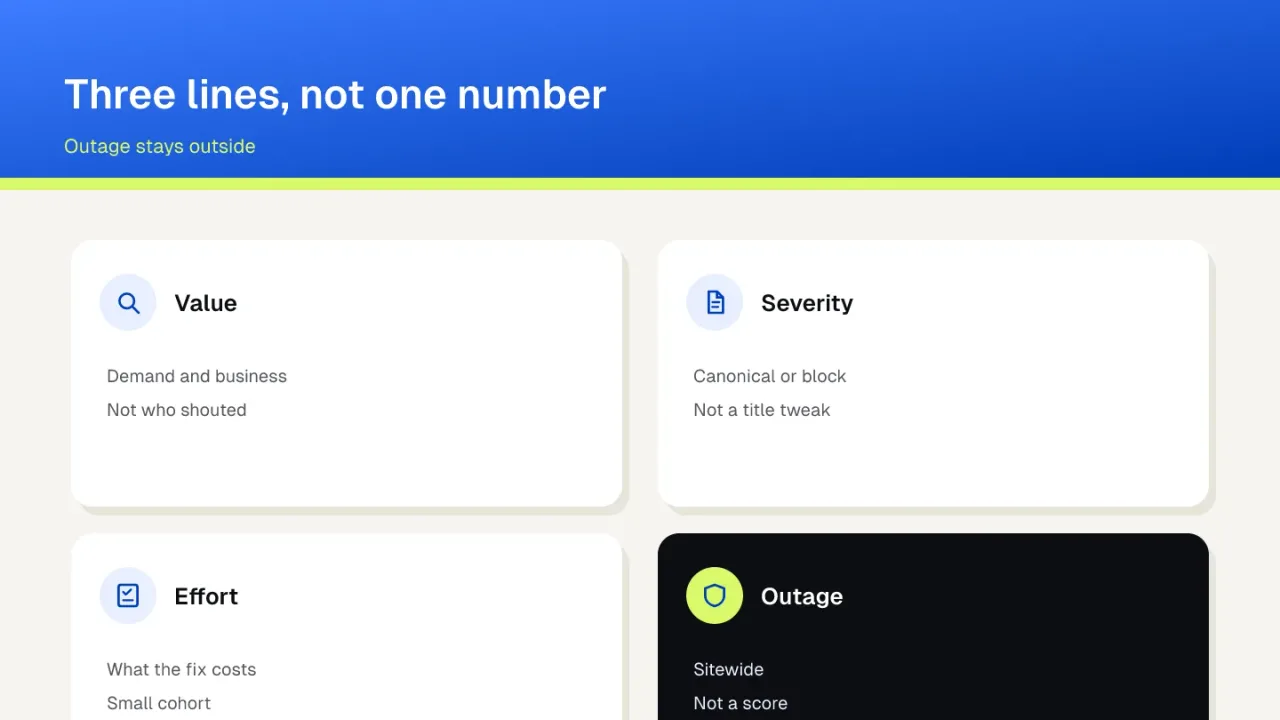
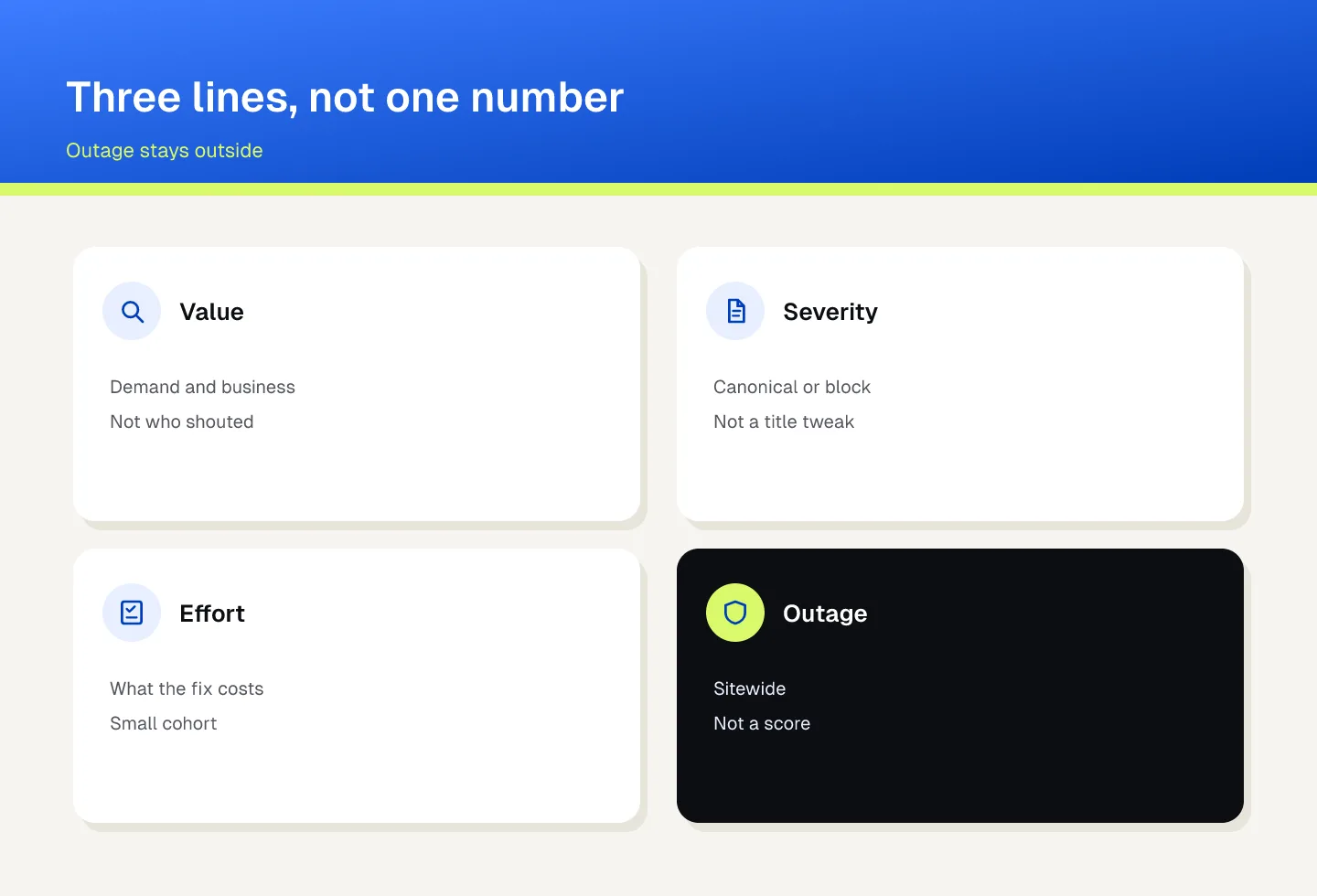
Keep business value, defect severity and repair effort as separate lines.
Separate blocking defects from pages that need better intent, links, title, proof or conversion UX.
Split a blocking defect from a page that only needs a clearer promise.
Work the queue in small cohorts and annotate deploy, inspection, recrawl and performance checkpoints.
Work a small cohort and mark deploy, inspection and the next checkpoint.
Remove completed items, re-score changed evidence and keep low-value URLs out of the critical path.
Drop finished rows and keep a sitewide outage out of the score.
This queue ranks the next URL to repair using Search Console evidence: demand, index state, canonical and effort. An editorial priority score ranks a content refresh. An indexation log records what a release did. Here you choose the next fix.
What a finished record looks like
A page with rising impressions and a canonical conflict should outrank a new low-demand page with no observed query signal.
What to keep in the record
Candidate export and its date
Value, severity and effort kept apart
Blocking defect versus editorial gap
Cohort, checkpoint and what left the queue
Export the candidate URLs with impressions, clicks, index state and canonical. Do not start from a wish list.
What changes the conclusion
Search Console data is delayed and incomplete.
A high score does not guarantee indexing.
Do not use priority scores to conceal a sitewide technical outage.
A page with rising impressions and a canonical conflict should outrank a new low-demand page with no observed query signal.
Frequently asked questions
Does a high score guarantee indexing?
No.
Is the report complete today?
No. Search Console is delayed and incomplete. Write that limit on the queue.
Can the score hide an outage?
It must not. A sitewide failure sits outside the queue.
Sources
These are the official sources for the part of the workflow they govern. A documented workflow is not a ranking or a citation outcome.
Open ViziGEO and review a documented sample of questions, mentions, recommendations and citations. The audit records what was observed. It does not guarantee a mention, a citation or a recommendation.