AI Visibility Citation Gap Prioritization: turn missing sources into a queue
A missing citation is a signal, not a task by itself. Prioritization connects the question, competing source, evidence gap and page action to a queue the team can execute.
ViziGEO Team4 min read
Key takeaways
How to prioritize AI citation gaps for GEO content and distribution.
A gap is a question where someone else is cited and you are not. This queue turns that observation into the smallest owned action. A citation-quality review judges a citation you already received. Distribution sends a finished page. Here you decide whether the gap is worth a page, a proof asset or nothing.
Create a gap register with question, answer, cited competitor, source URL, missing proof and observation date.
A competitor citation on a high-intent comparison question with an existing proof page is a faster win than a low-demand question requiring new research.
Citation presence varies by model, prompt and time.
Contents
What this workflow decides
How to prioritize AI citation gaps for GEO content and distribution.
A missing citation is a signal, not a task by itself. Prioritization connects the question, competing source, evidence gap and page action to a queue the team can execute.
A gap is a question where someone else is cited and you are not. This queue turns that observation into the smallest owned action. A citation-quality review judges a citation you already received. Distribution sends a finished page. Here you decide whether the gap is worth a page, a proof asset or nothing.
How to do it
Create a gap register with question, answer, cited competitor, source URL, missing proof and observation date.
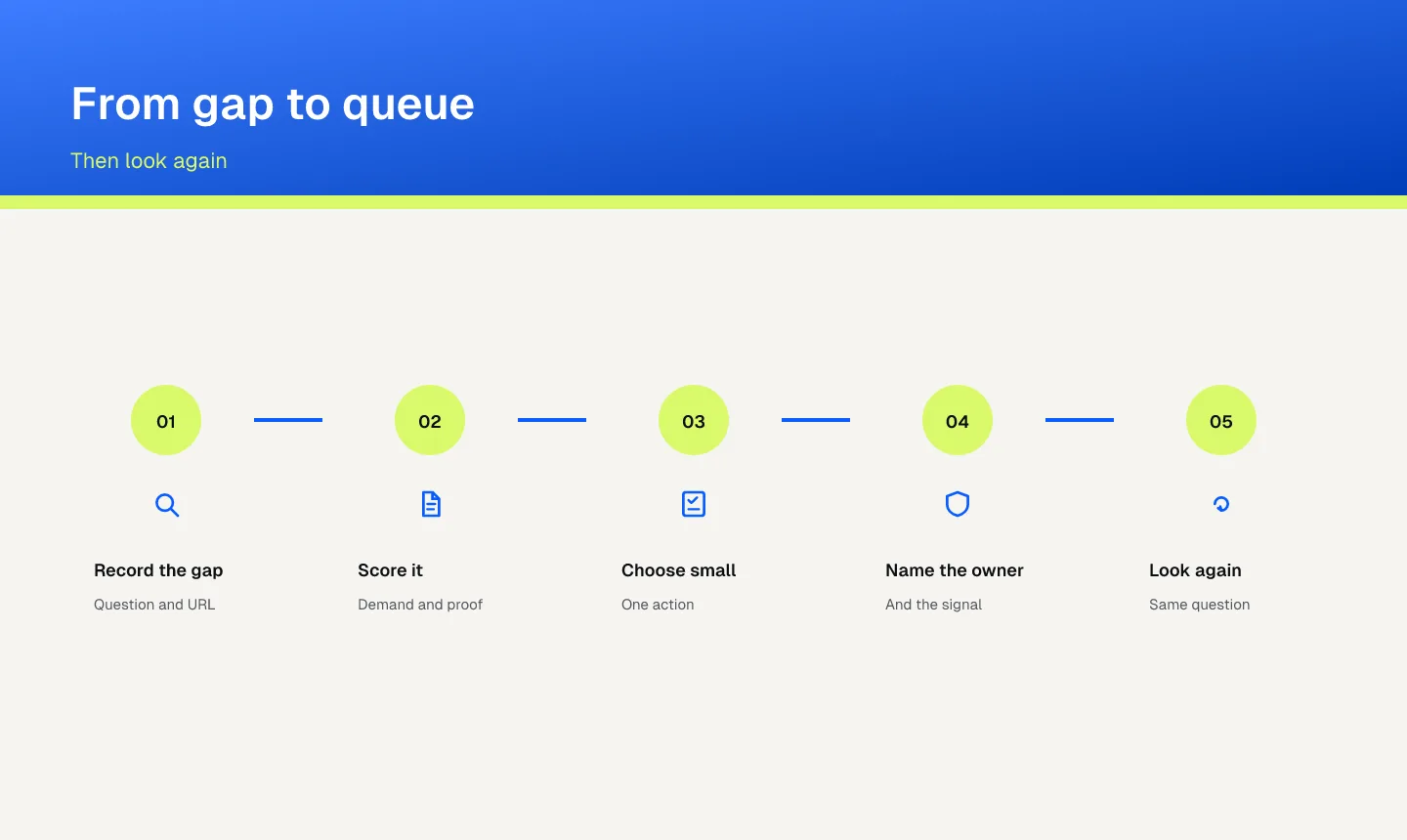
Record the question, the cited competitor, the missing proof and the observation date.
Score demand, commercial intent, competitor advantage, evidence readiness, page effort and distribution access.
Score demand, commercial intent and whether you already have the proof.
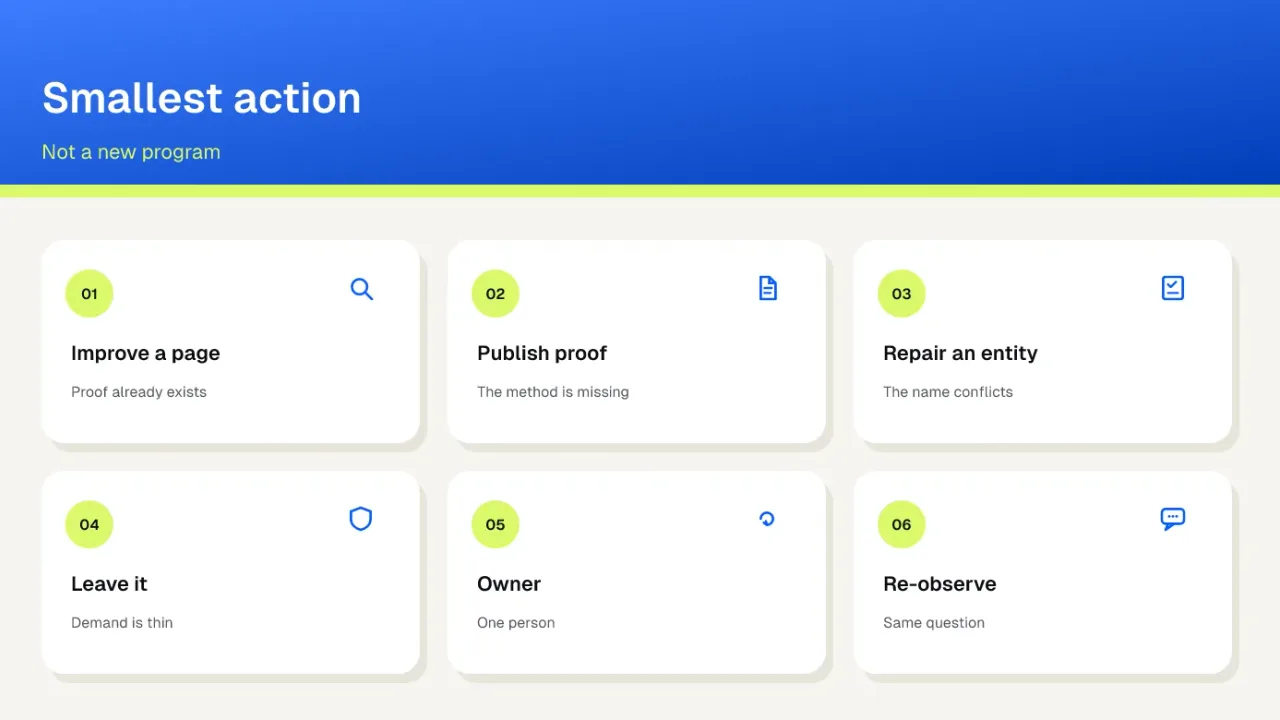
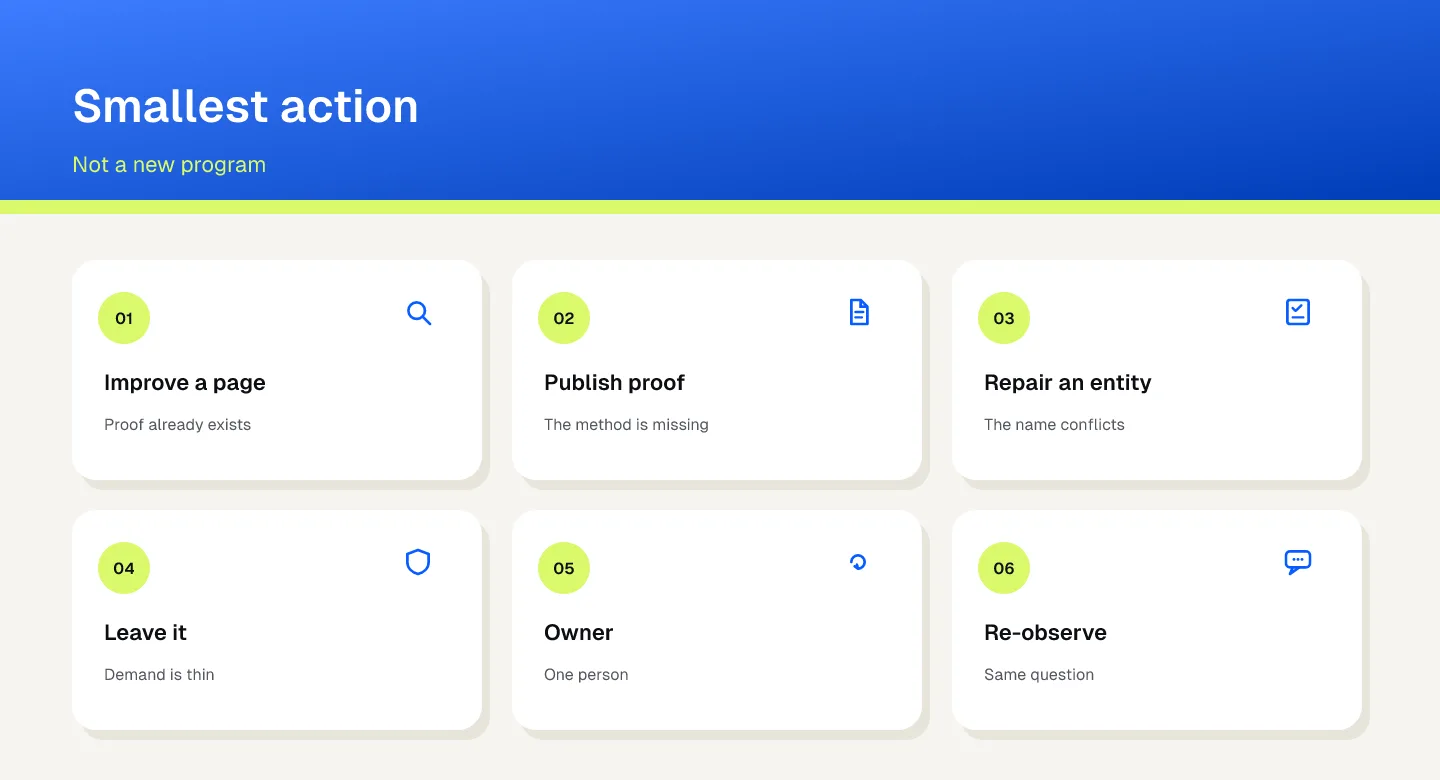
Choose the smallest useful intervention: improve an owned page, publish a proof asset, repair an entity signal or propose a relevant reference.
Pick the smallest action: improve an owned page, publish proof, repair an entity, or leave it.
Assign an owner, target URL, review date and success metric such as citation presence, qualified visit or assisted signup.
Assign an owner and a success signal such as a later citation or a qualified visit. Outreach is not the signal.
Re-observe the same question panel and close, re-score or escalate each gap using recorded evidence.
Re-observe the same question. Close the gap, rescore it, or escalate it with the new evidence.
A gap is a question where someone else is cited and you are not. This queue turns that observation into the smallest owned action. A citation-quality review judges a citation you already received. Distribution sends a finished page. Here you decide whether the gap is worth a page, a proof asset or nothing.
What a finished record looks like
A competitor citation on a high-intent comparison question with an existing proof page is a faster win than a low-demand question requiring new research.
What to keep in the record
Question, cited URL and missing proof
Scores for demand and proof readiness
Smallest action and its owner
Same question observed again
Record the question, the cited competitor, the missing proof and the observation date.
What changes the conclusion
Citation presence varies by model, prompt and time.
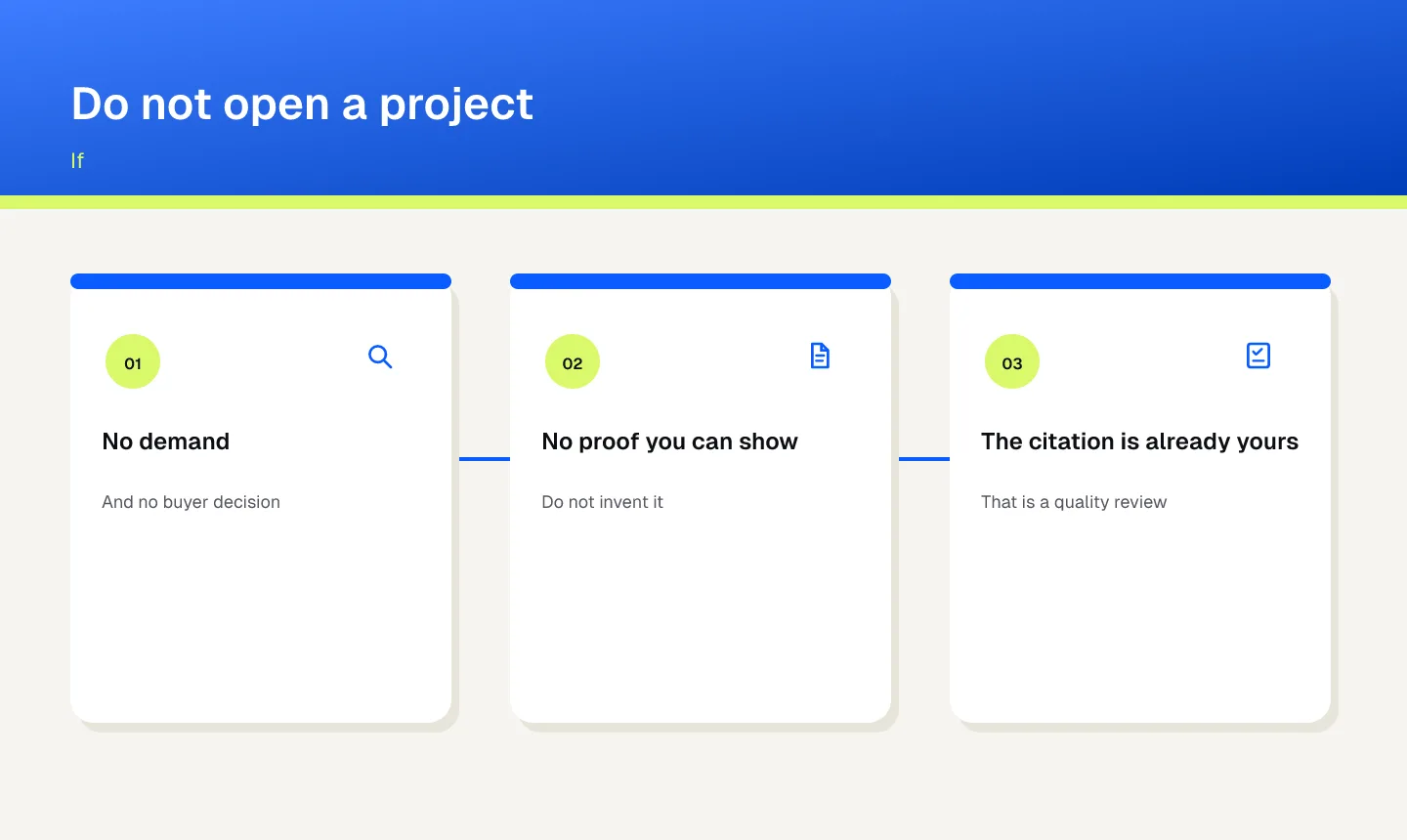
Outreach never guarantees editorial placement.
Do not manufacture evidence to fill a gap.
A competitor citation on a high-intent comparison question with an existing proof page is a faster win than a low-demand question requiring new research.
Frequently asked questions
Does a missing citation assign the work by itself?
No. It is a signal. The queue decides if it is worth an action.
Does outreach guarantee placement?
No.
Can you invent proof to close a gap?
No.
Sources
These are the official sources for the part of the workflow they govern. A documented workflow is not a ranking or a citation outcome.
Open ViziGEO and review a documented sample of questions, mentions, recommendations and citations. The audit records what was observed. It does not guarantee a mention, a citation or a recommendation.