GEO Prompt Panel Design: measure visibility with repeatable questions
A prompt panel is a measurement instrument, not a random list of questions. Its design determines whether visibility changes are meaningful.
ViziGEO Team3 min read
Key takeaways
How to design a repeatable prompt panel for GEO and AI search visibility.
This page designs the question instrument itself: families, frozen version and fields you will record. It does not score visibility and it does not read out an experiment.
Define the business questions, entities, markets, languages and funnel stages the panel must represent.
A panel for an AI visibility platform should include both “what is GEO?” and implementation or vendor-selection questions.
A panel cannot represent every user question.
Contents
What this workflow decides
How to design a repeatable prompt panel for GEO and AI search visibility.
A prompt panel is a measurement instrument, not a random list of questions. Its design determines whether visibility changes are meaningful.
This page designs the question instrument itself: families, frozen version and fields you will record. It does not score visibility and it does not read out an experiment.
How to do it
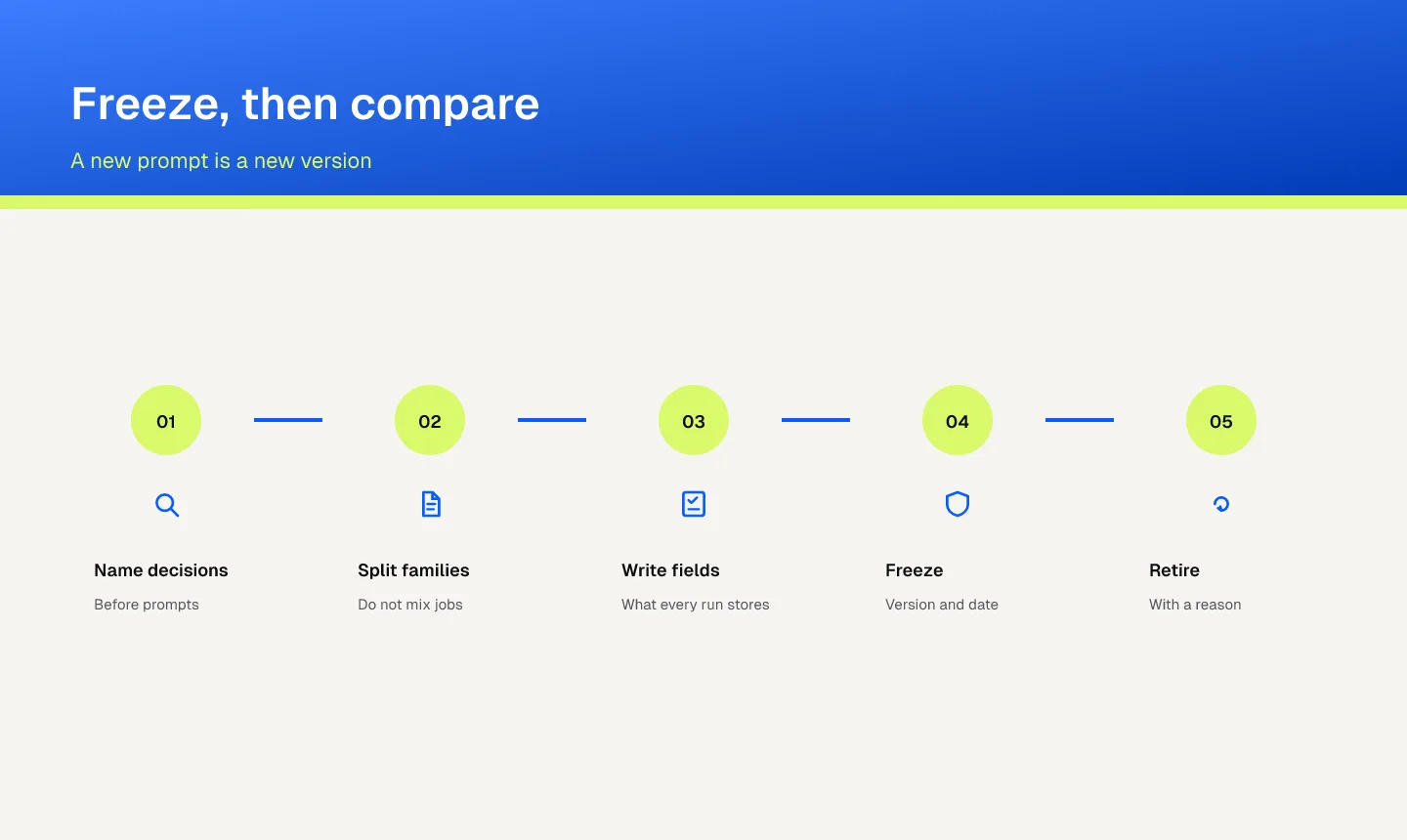
Define the business questions, entities, markets, languages and funnel stages the panel must represent.
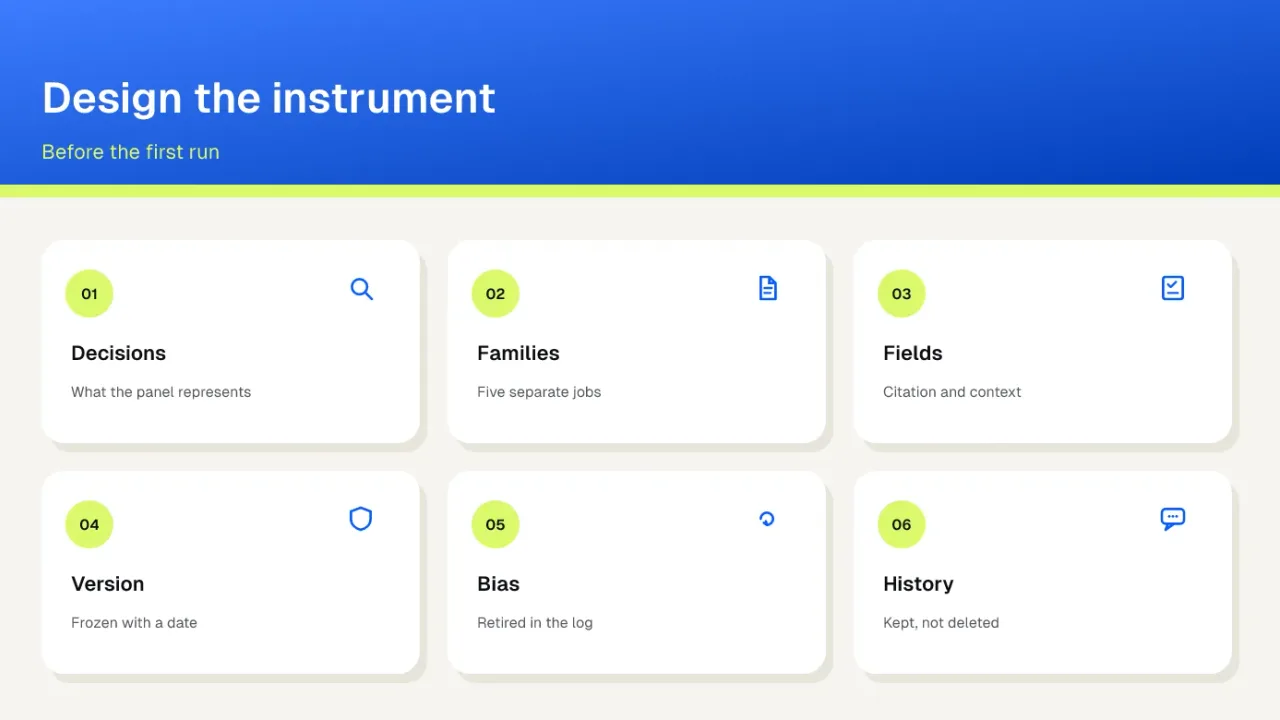
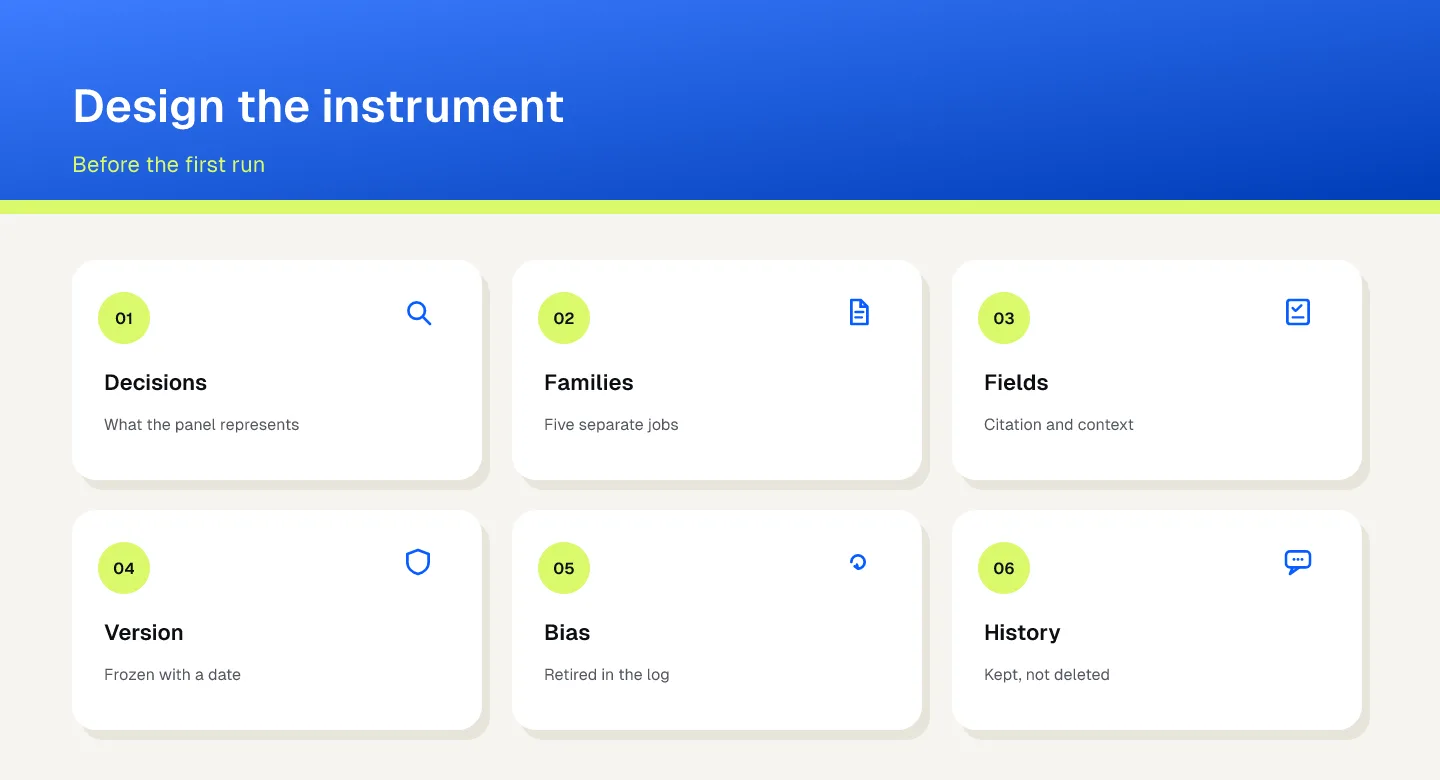
Name the buyer decisions the panel must represent before you write a single prompt.
Create prompt families for definition, comparison, implementation, troubleshooting and buying decisions.
Keep definition, comparison, implementation, troubleshooting and purchase as separate families.
Write the fields you will capture, including citation and claim context, before the first run.
Freeze the version, date and observation procedure before comparing a new run with the baseline.
Freeze version, date and procedure. A changed prompt is a new panel, not a continuation.
Retire biased or redundant prompts and document why the panel changed.
Retire a biased prompt in the log. Do not delete the history of the runs that used it.
This page designs the question instrument itself: families, frozen version and fields you will record. It does not score visibility and it does not read out an experiment.
What a finished record looks like
A panel for an AI visibility platform should include both “what is GEO?” and implementation or vendor-selection questions.
What to keep in the record
Buyer decisions and entities covered
Prompt families and frozen version
Fields captured on every run
Prompts retired and why
Name the buyer decisions the panel must represent before you write a single prompt.
What changes the conclusion
A panel cannot represent every user question.
Model outputs vary by time, account and context.
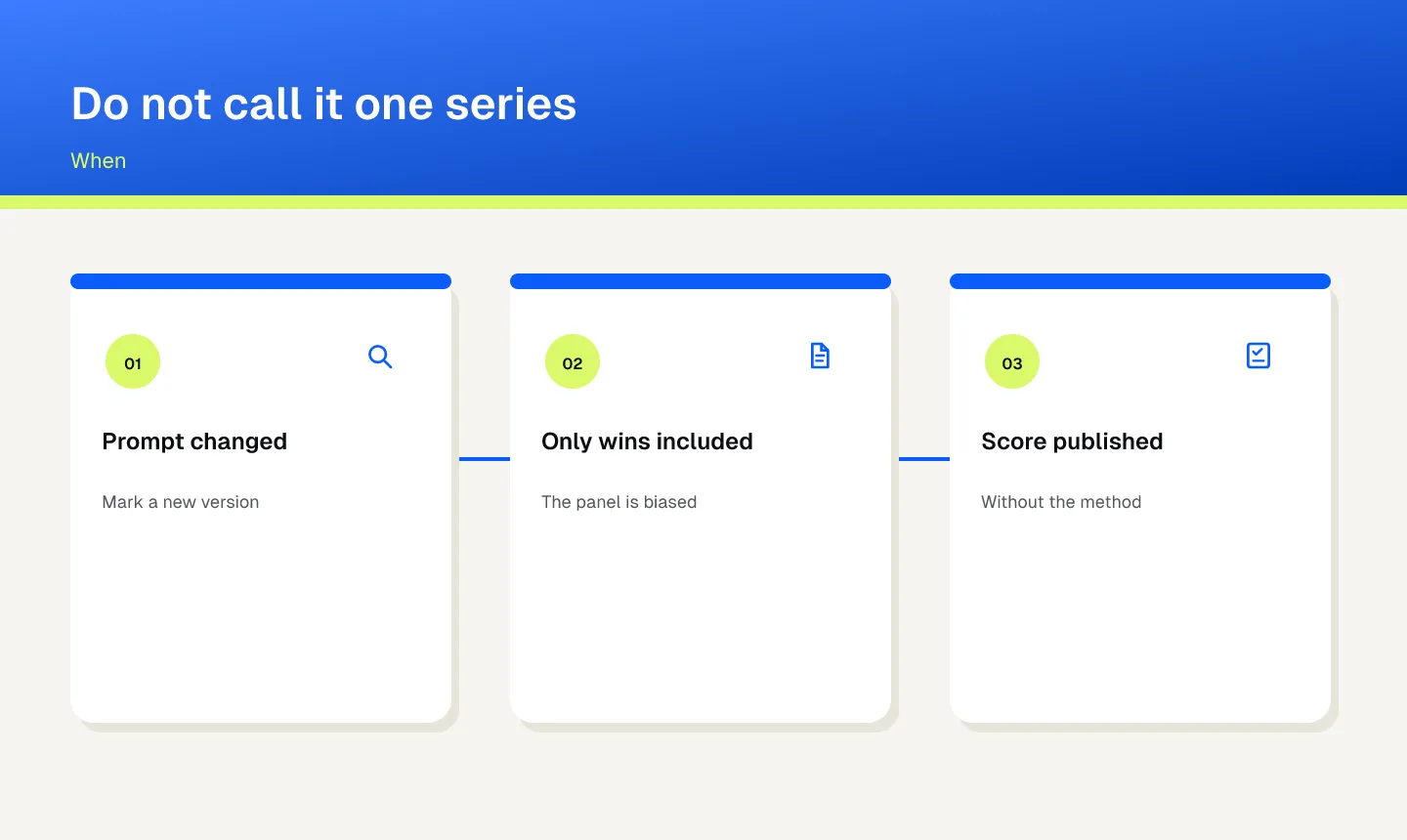
Do not change prompts mid-test and call the result a clean comparison.
A panel for an AI visibility platform should include both “what is GEO?” and implementation or vendor-selection questions.
Frequently asked questions
Does a longer panel remove bias?
No. A longer list can still over-represent the questions where the brand already appears.
Can I edit a prompt and keep the time series?
Only if you mark a new version. Otherwise the comparison is not the same instrument.
Is this the visibility score?
No. The panel is the set of questions. A score, if you publish one, needs its own method page.
Sources
These are the official sources for the part of the workflow they govern. A documented workflow is not a ranking or a citation outcome.
Open ViziGEO and review a documented sample of questions, mentions, recommendations and citations. The audit records what was observed. It does not guarantee a mention, a citation or a recommendation.