GEO Indexation Evidence Log: prove what happened after release
Indexation work becomes actionable when every release has evidence. A log separates submitted URLs from crawled, indexed and performing pages.
ViziGEO Team3 min read
Key takeaways
How to document and troubleshoot GEO indexation after publishing.
The log is one row per released URL: submitted, discovered, crawled, indexed, excluded or unknown. The technical checklist gates a template before you scale it. This page records what happened after a release.
Create one row per released URL with version, locale, canonical, sitemap timestamp and owner.
A URL can be in the sitemap and still be excluded because its canonical points elsewhere; the log makes that distinction visible.
Search Console processing is delayed.
Contents
What this workflow decides
How to document and troubleshoot GEO indexation after publishing.
Indexation work becomes actionable when every release has evidence. A log separates submitted URLs from crawled, indexed and performing pages.
The log is one row per released URL: submitted, discovered, crawled, indexed, excluded or unknown. The technical checklist gates a template before you scale it. This page records what happened after a release.
How to do it
Create one row per released URL with version, locale, canonical, sitemap timestamp and owner.
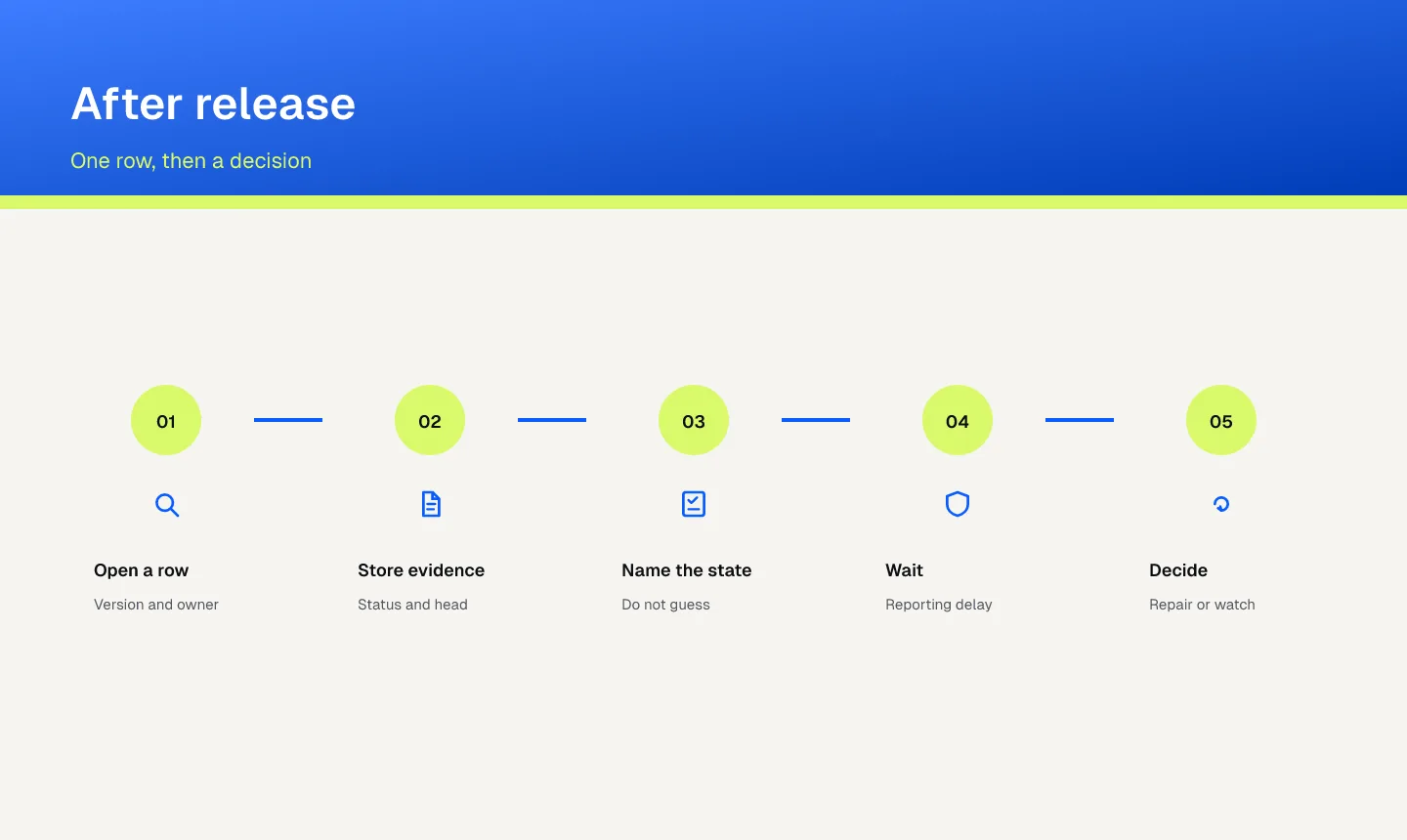
Give every released URL its own row with version, locale, canonical and owner.
Store robots, HTTP status, rendered head and the inspection evidence on that row.
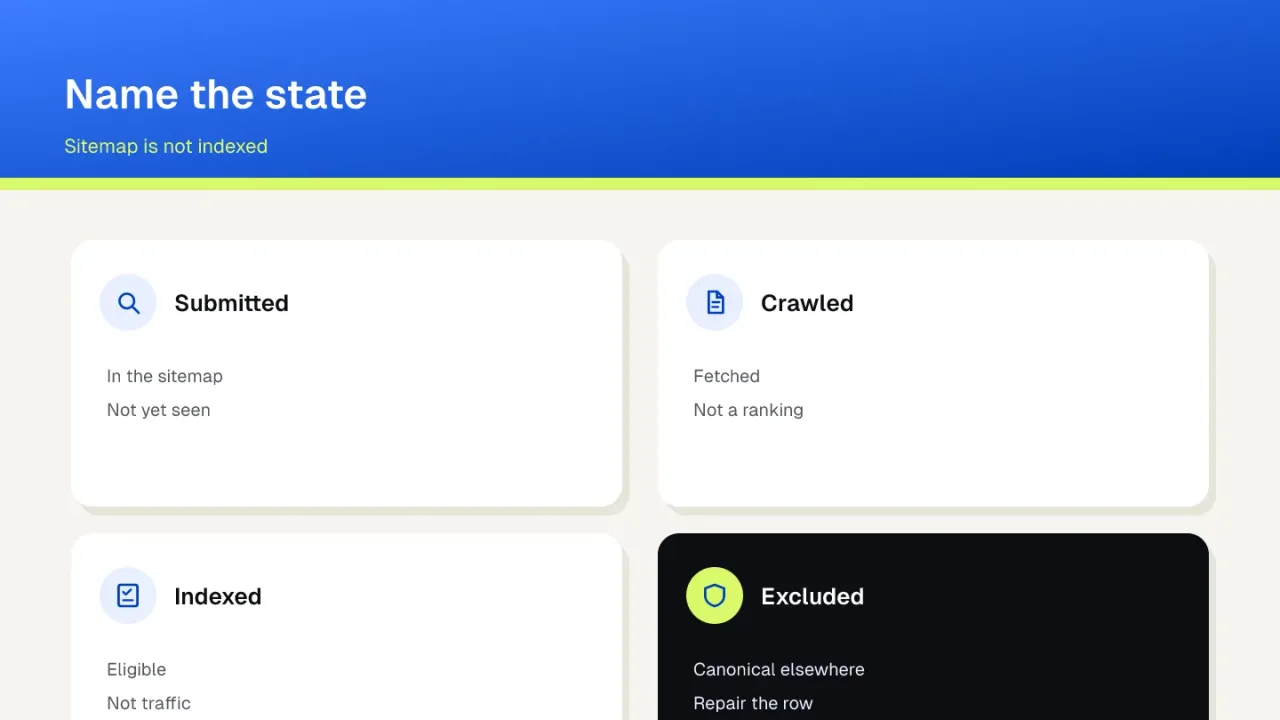
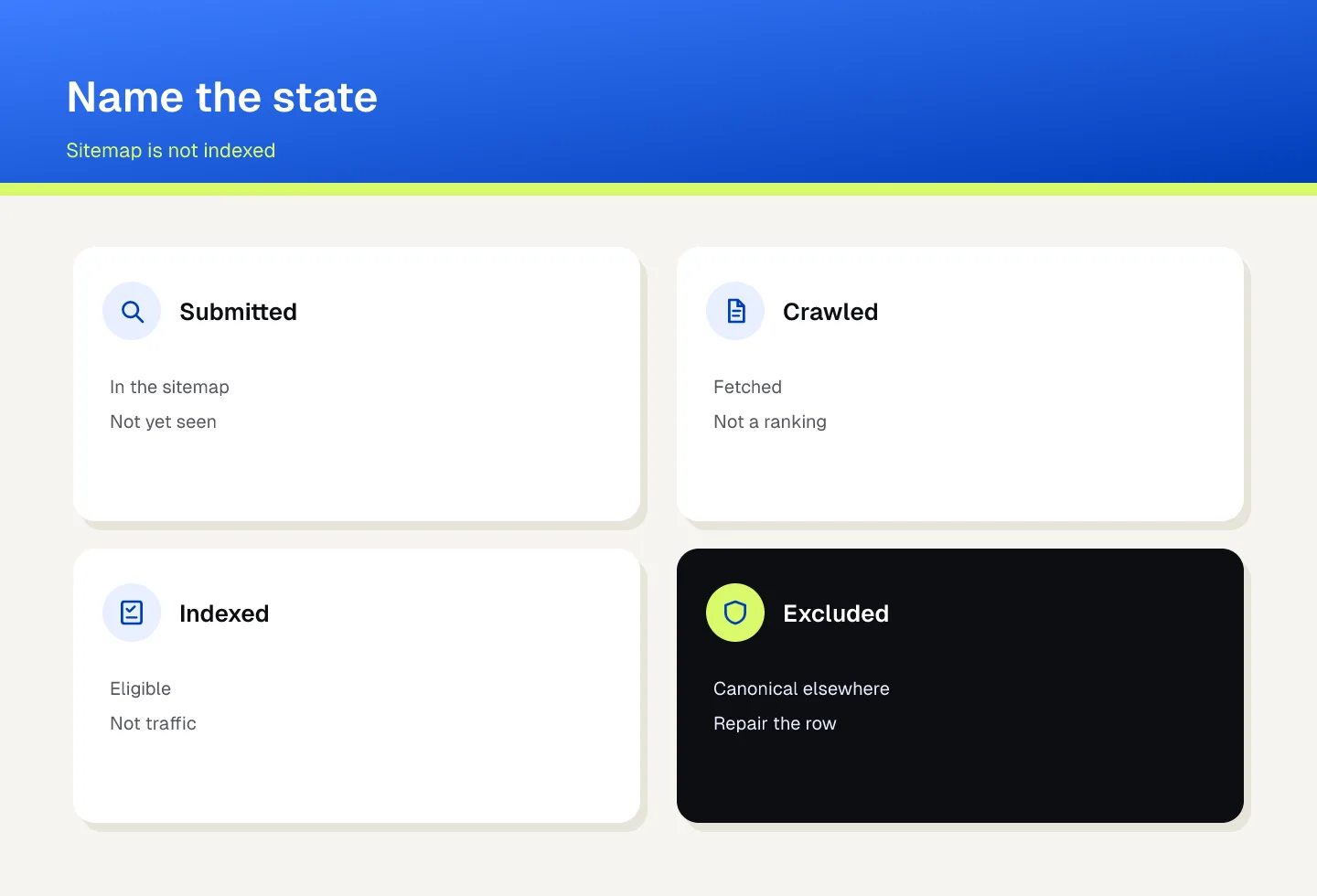
Classify the state as submitted, discovered, crawled, indexed, excluded, blocked or unknown.
Name the state. Being in the sitemap is not the same as being indexed.
Attach impressions, clicks and conversion observations only after the relevant reporting delay.
Add impressions and conversions only after the reporting delay.
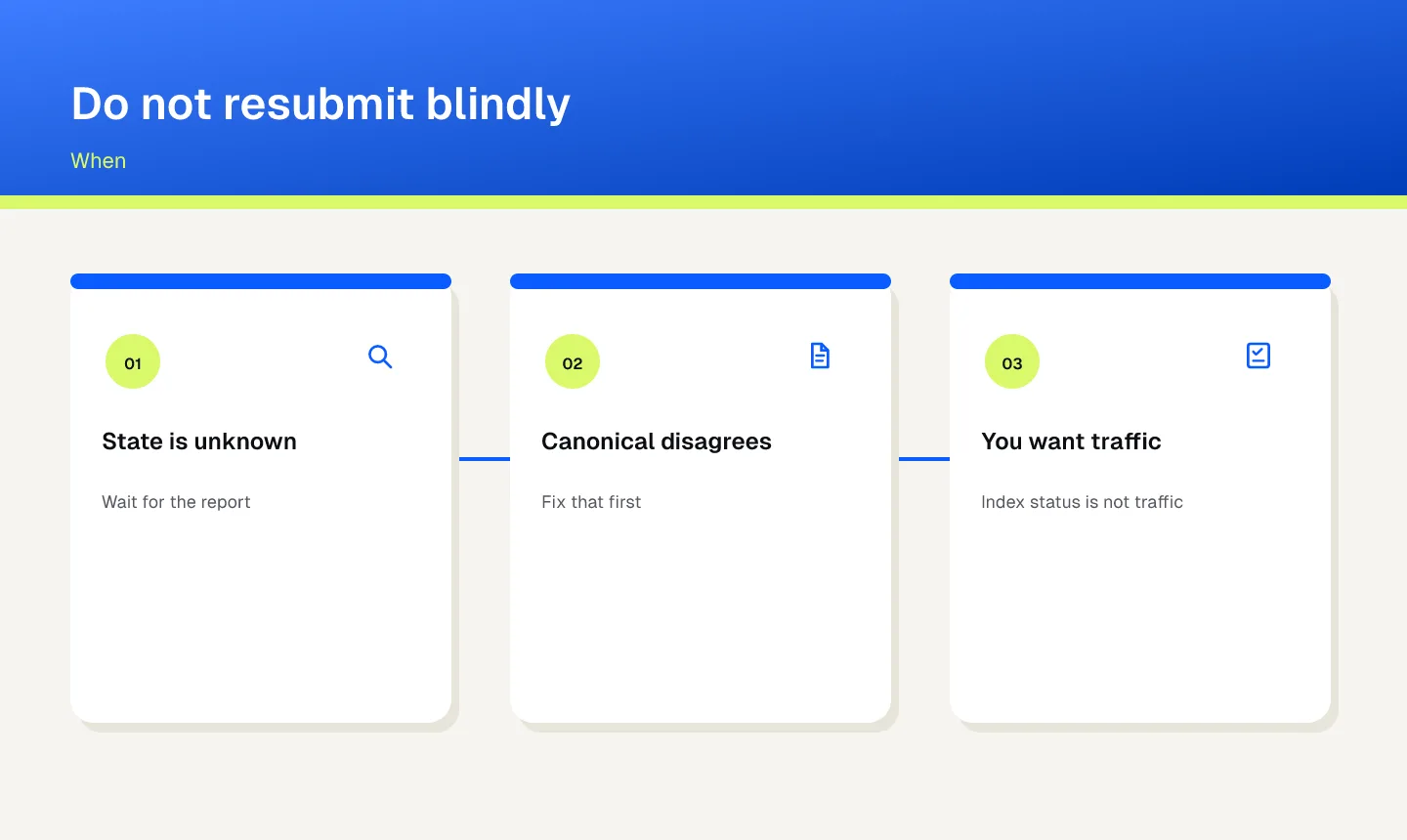
Use the history to choose repair, merge, redirect, refresh or monitor instead of resubmitting blindly.
Use the history to repair, merge, redirect or watch. Do not resubmit the same URL because the row feels empty.
The log is one row per released URL: submitted, discovered, crawled, indexed, excluded or unknown. The technical checklist gates a template before you scale it. This page records what happened after a release.
What a finished record looks like
A URL can be in the sitemap and still be excluded because its canonical points elsewhere; the log makes that distinction visible.
What to keep in the record
URL, version, canonical and owner
Robots, HTTP and rendered head
State: submitted through excluded
Decision after the reporting delay
Give every released URL its own row with version, locale, canonical and owner.
What changes the conclusion
Search Console processing is delayed.
Index status alone does not prove traffic value.
Do not treat a missing report row as proof of a server failure.
A URL can be in the sitemap and still be excluded because its canonical points elsewhere; the log makes that distinction visible.
Frequently asked questions
Does a sitemap entry mean the URL is indexed?
No. The log exists to keep those states apart.
Is a missing report row a server failure?
No. Processing is delayed. A missing row is unknown, not an outage.
Does index status prove the page is valuable?
No. Traffic and conversions are a later column, not the index state.
Sources
These are the official sources for the part of the workflow they govern. A documented workflow is not a ranking or a citation outcome.
Open ViziGEO and review a documented sample of questions, mentions, recommendations and citations. The audit records what was observed. It does not guarantee a mention, a citation or a recommendation.