Is AI answer monitoring a replacement for rank tracking?
No. Rank tracking and AI answer monitoring measure different systems. A strong measurement program uses each for the question it can actually answer.
Blog
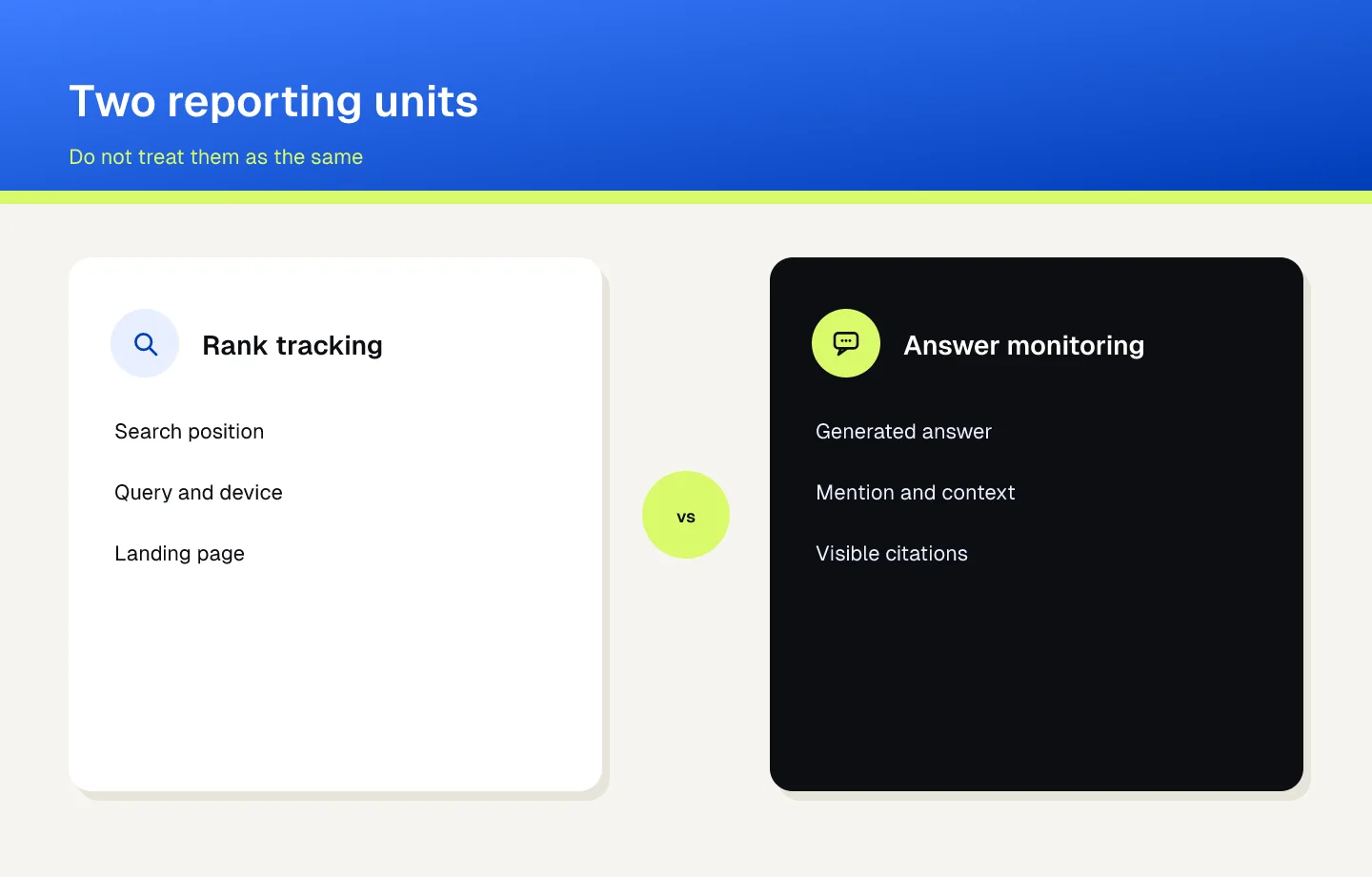
Search positions and generated answers are not interchangeable reporting units. Treating them as the same creates false certainty in both SEO and GEO decisions.

| Rank tracking | AI answer monitoring | |
|---|---|---|
| Unit | A search-result position for a query, location and device. | A generated answer for a defined buyer question, interface and collection moment. |
| Evidence | Ranking position, landing page, SERP features and search-demand context. | Brand mention, recommendation context, visible citations, source domains and answer context. |
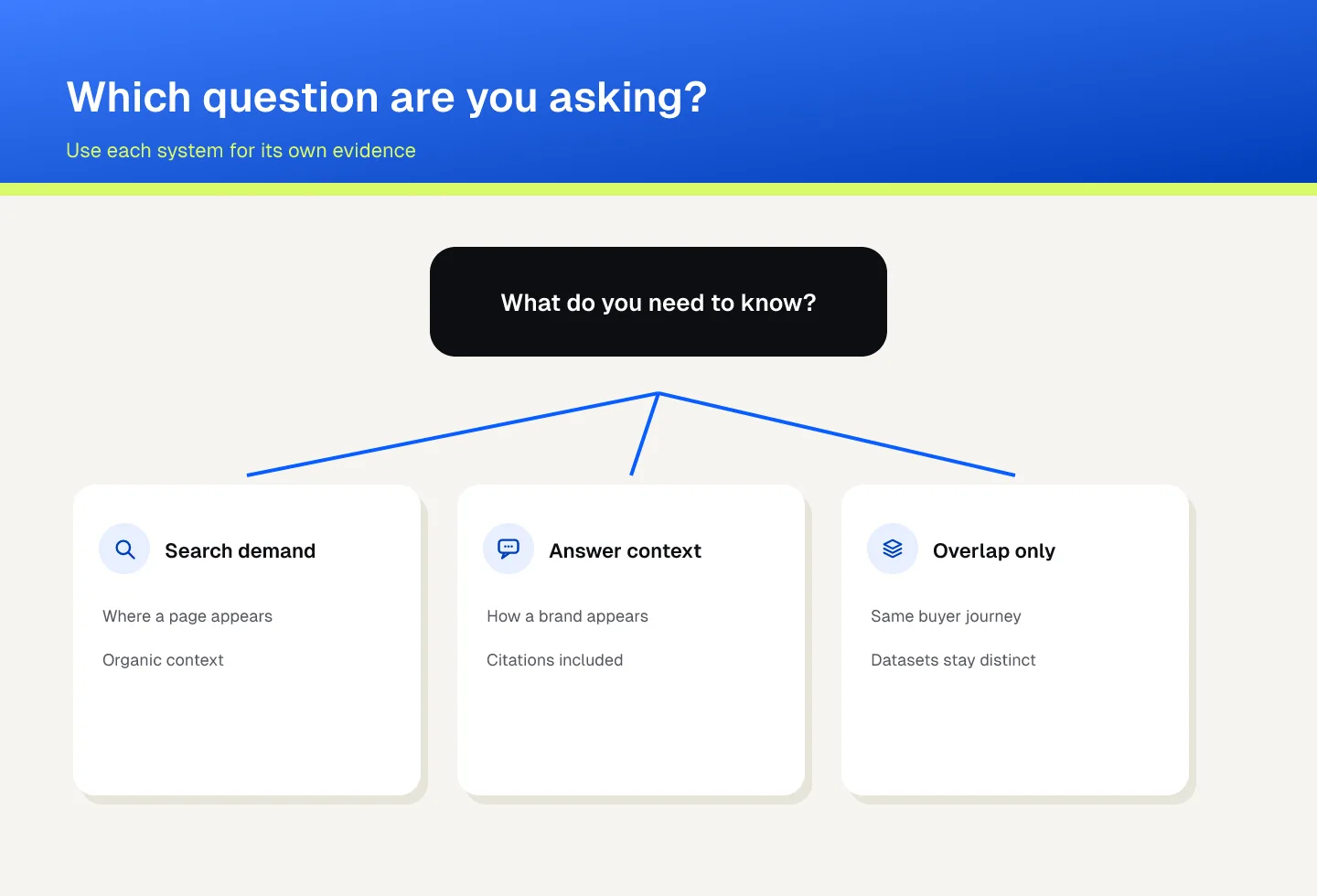
| Question | Where does a page appear in a search result? | How does a brand or source appear in a generated answer? |
| Stability | Useful for trend quality, although the ranking is a relatively stable reporting unit. | Essential: generated answers can vary between runs and interfaces. |
| Does not prove | That a ranking caused a conversion or will persist unchanged. | Why a model selected a source, or that a future answer will repeat a mention or citation. |
No. Rank tracking and AI answer monitoring measure different systems. A strong measurement program uses each for the question it can actually answer.
Not on its own. It can help describe observed answer presence within a defined sample, but it does not establish causation, future visibility or conversion impact.
A raw mention loses the evidence needed for interpretation. Visible sources, answer wording, collection time and question framing help a team review what was actually observed.
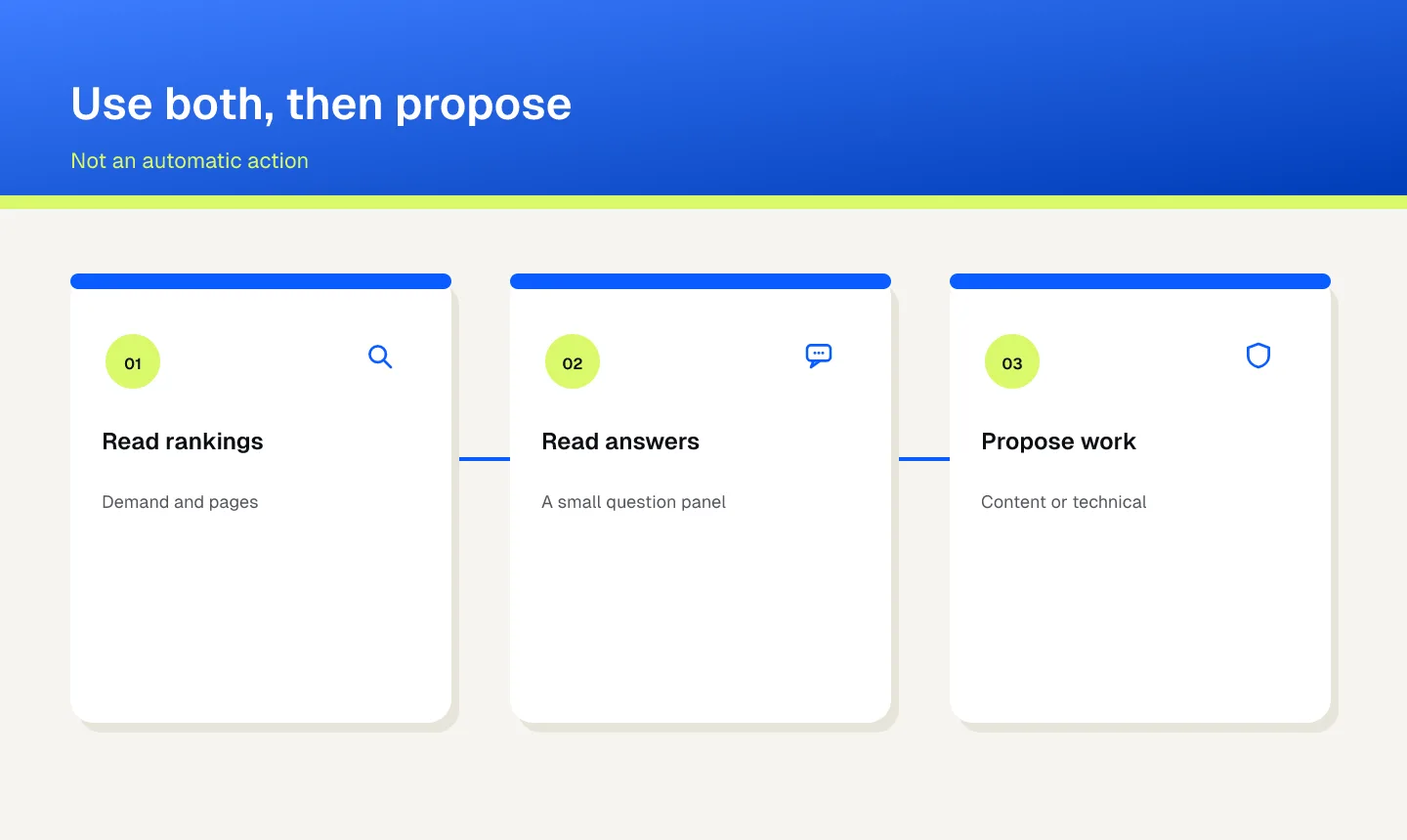
Keep them distinct. Compare them only where the buyer journey overlaps, and do not turn the comparison into an automatic action.
This comparison is a ViziGEO working distinction. It does not claim that either system predicts revenue.
Open ViziGEO and review a documented sample of questions, mentions, recommendations and citations. The audit records what was observed. It does not guarantee a mention, a citation or a recommendation.