Does GEO replace SEO?
No. Search visibility, crawlability and helpful content remain important foundations, particularly for AI features within search.
Comparison guide
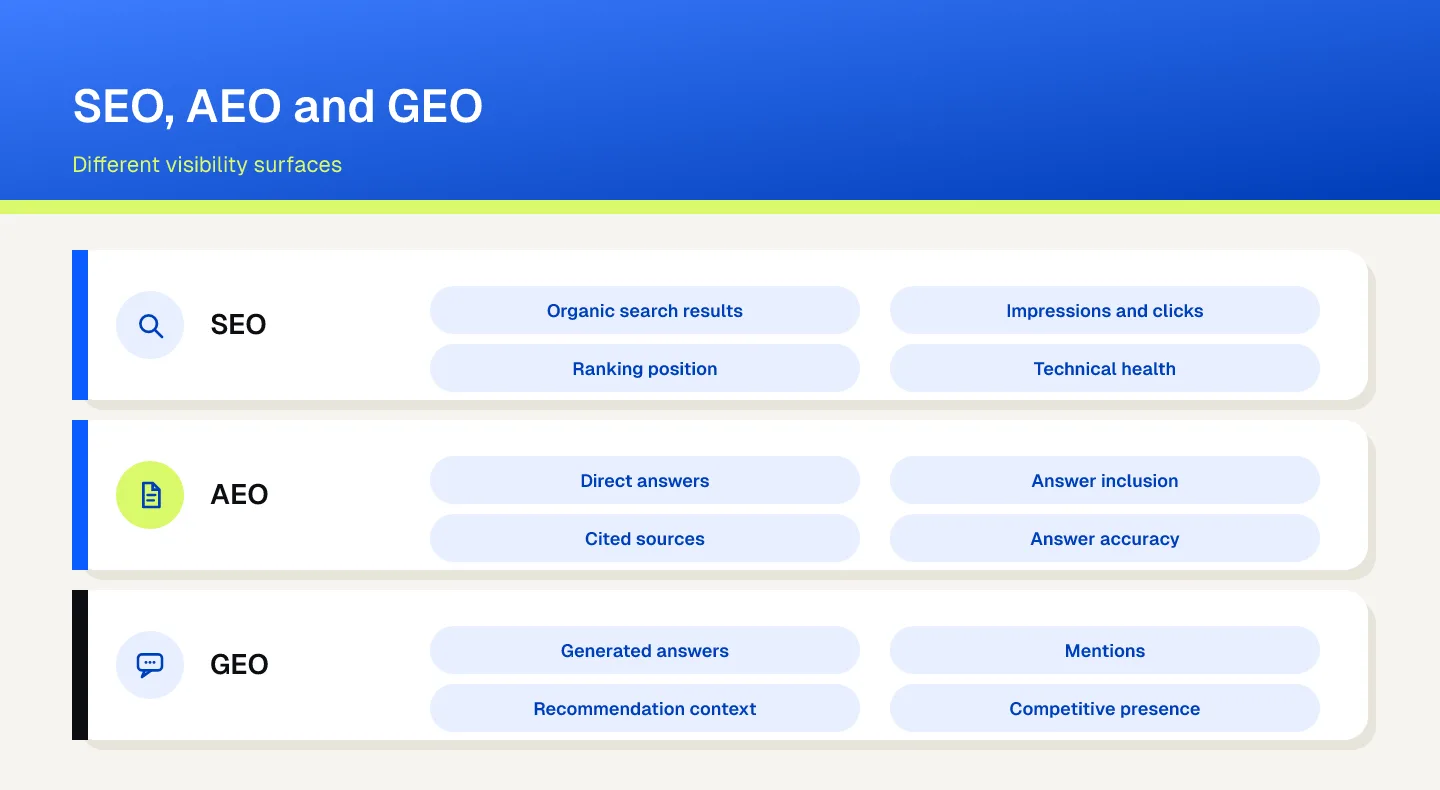
SEO, AEO and GEO name different visibility surfaces. Useful content, clear entities, technical access and credible evidence still sit underneath all three.

The labels describe where a result is observed. They do not replace one another, and they do not create one universal ranking.
| Discipline | Focus | What a team can record |
|---|---|---|
| SEO | Discovery and performance in organic search results. | Indexed pages, impressions, clicks, rankings, conversions and technical health. |
| AEO | Making information clear and useful for systems that provide direct answers. | Answer inclusion, cited sources, question coverage and answer accuracy within a defined scope. |
| GEO | Visibility and representation in generated answers and recommendations. | Mentions, recommendation context, citations, competitive share of voice and stability. |
Foundational work still matters, particularly where AI features sit inside search. The shared list is practical, not a tactic that guarantees inclusion.
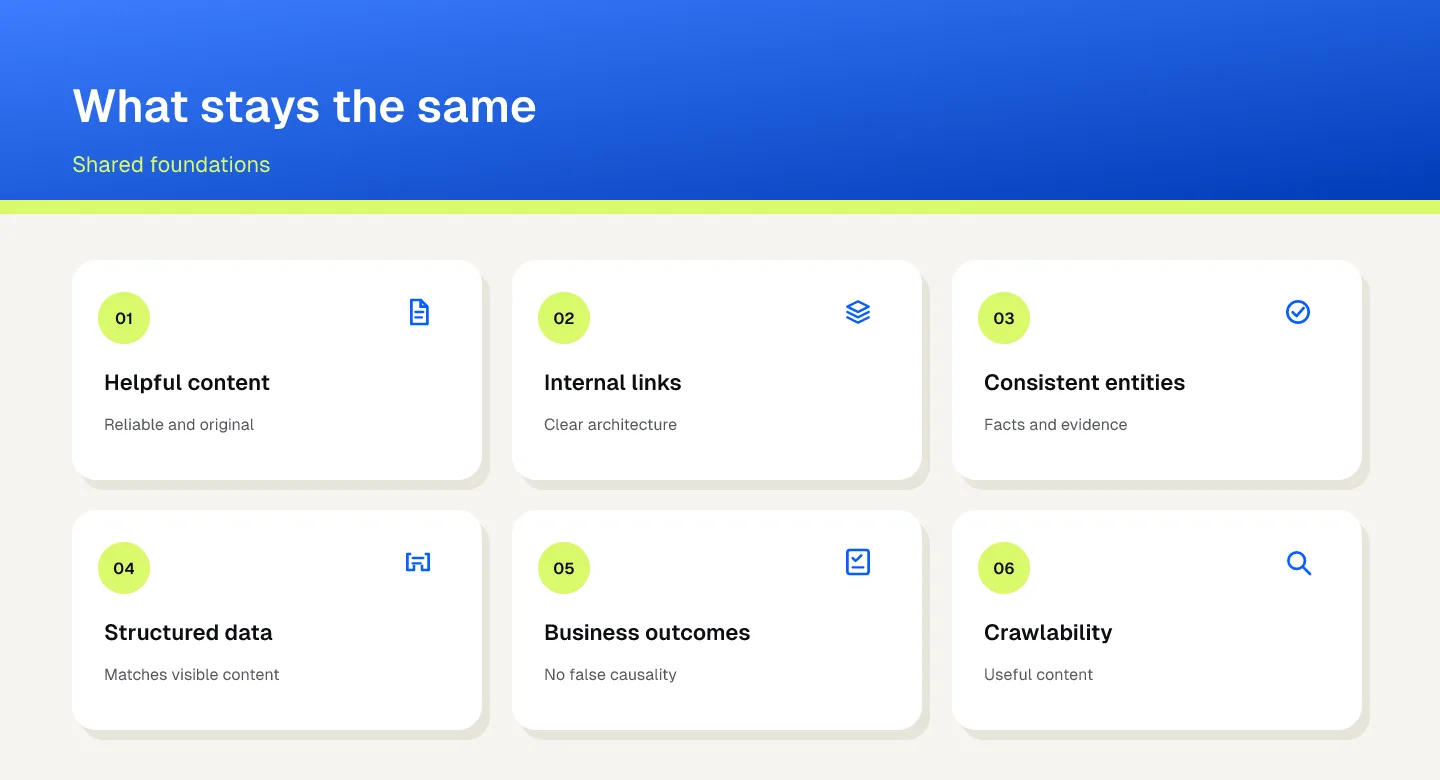
SEO work still includes crawlability, useful content, internal linking, page experience and authority. AEO adds clear entities, concise explanations, structured content and verifiable supporting evidence. GEO adds prompt research, repeated monitoring, content gaps, technical access and third-party authority.
No. Search visibility, crawlability and helpful content remain important foundations, particularly for AI features within search.
No. AEO focuses on clear, useful information for direct-answer systems. GEO focuses on mentions, recommendation context and citations in generated answers. They overlap in entities, evidence and technical access.
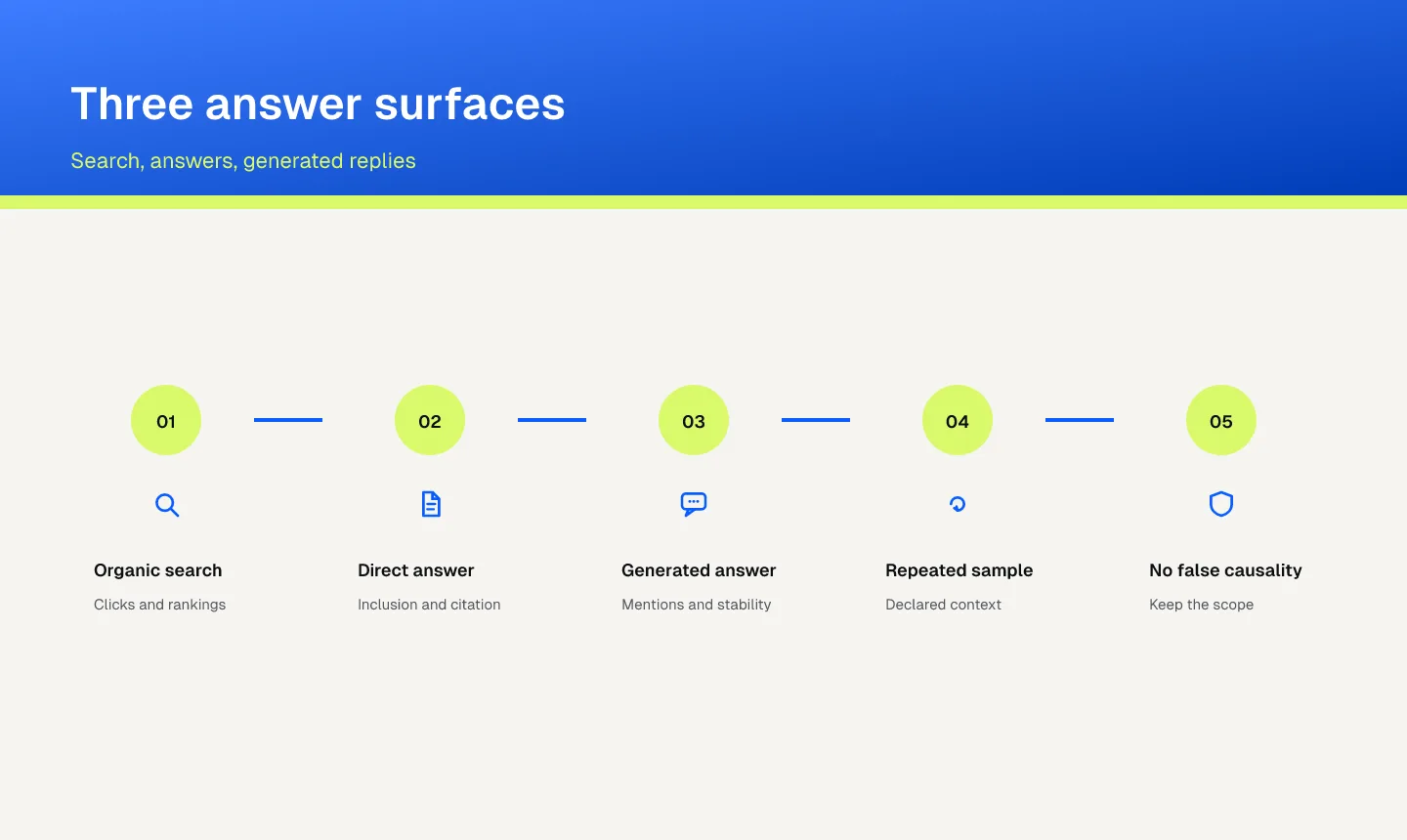
Measure the surface you are making a decision about, with a declared sample. Do not collapse organic rankings and generated answers into one unexplained score.
No. Accurate structured data should match visible content. It does not guarantee a mention, a citation or a ranking.
The distinctions above are practical working definitions. Claims about Google Search are grounded in Google Search Central documentation.
Open ViziGEO and review a documented sample of questions, mentions, recommendations and citations. The audit records what was observed. It does not guarantee a mention, a citation or a recommendation.