Can I search ChatGPT once to check my brand visibility?
One search can provide an example, but not a reliable baseline. Generated answers vary, so important questions need repeated observations under documented conditions.
Practical guide
A defensible tracker measures a declared panel of buyer questions, repeats the observations and keeps every mention traceable to the answer that produced it.

Build a representative panel around problems, categories, comparisons and purchase decisions, not prompts chosen because they already mention your brand.
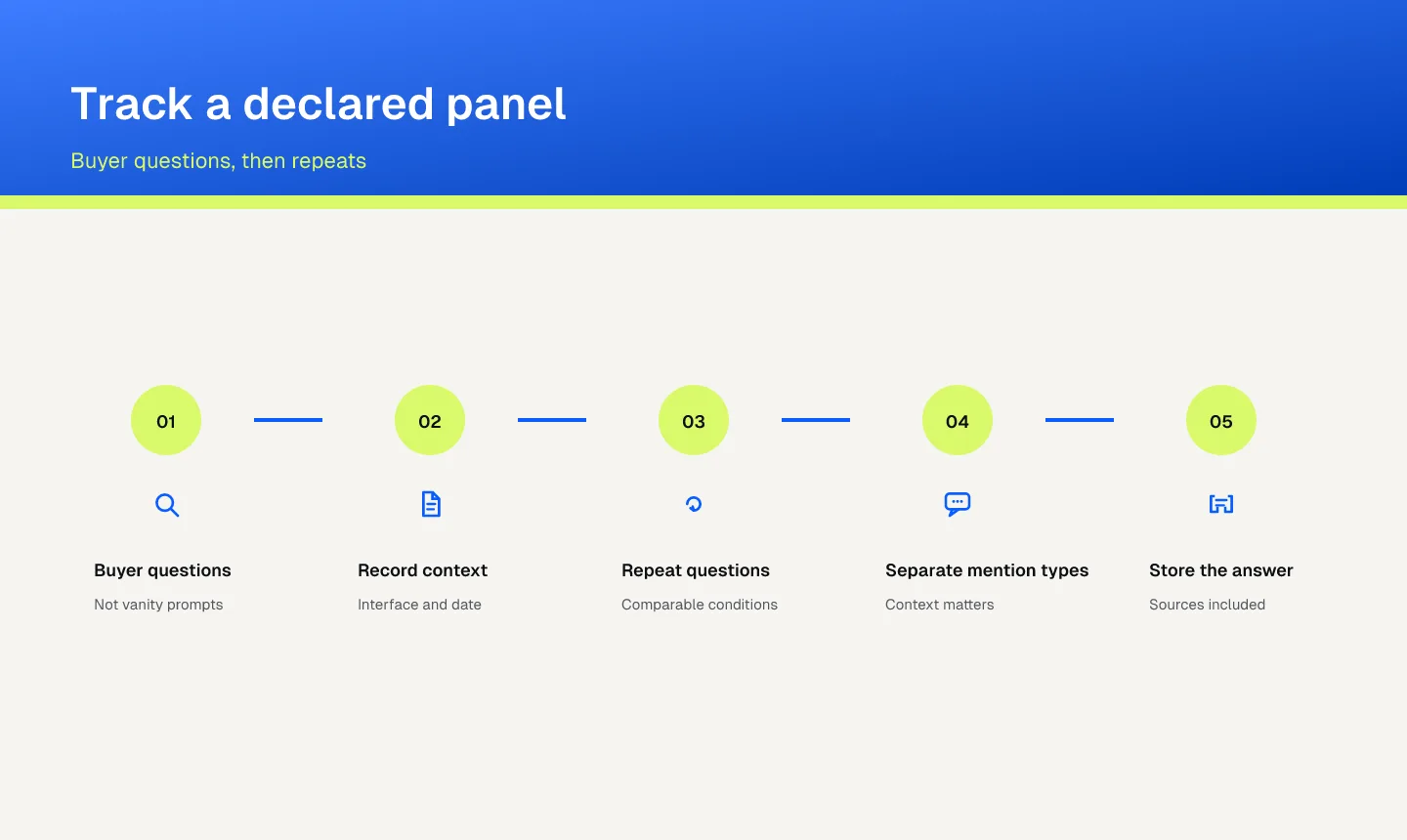
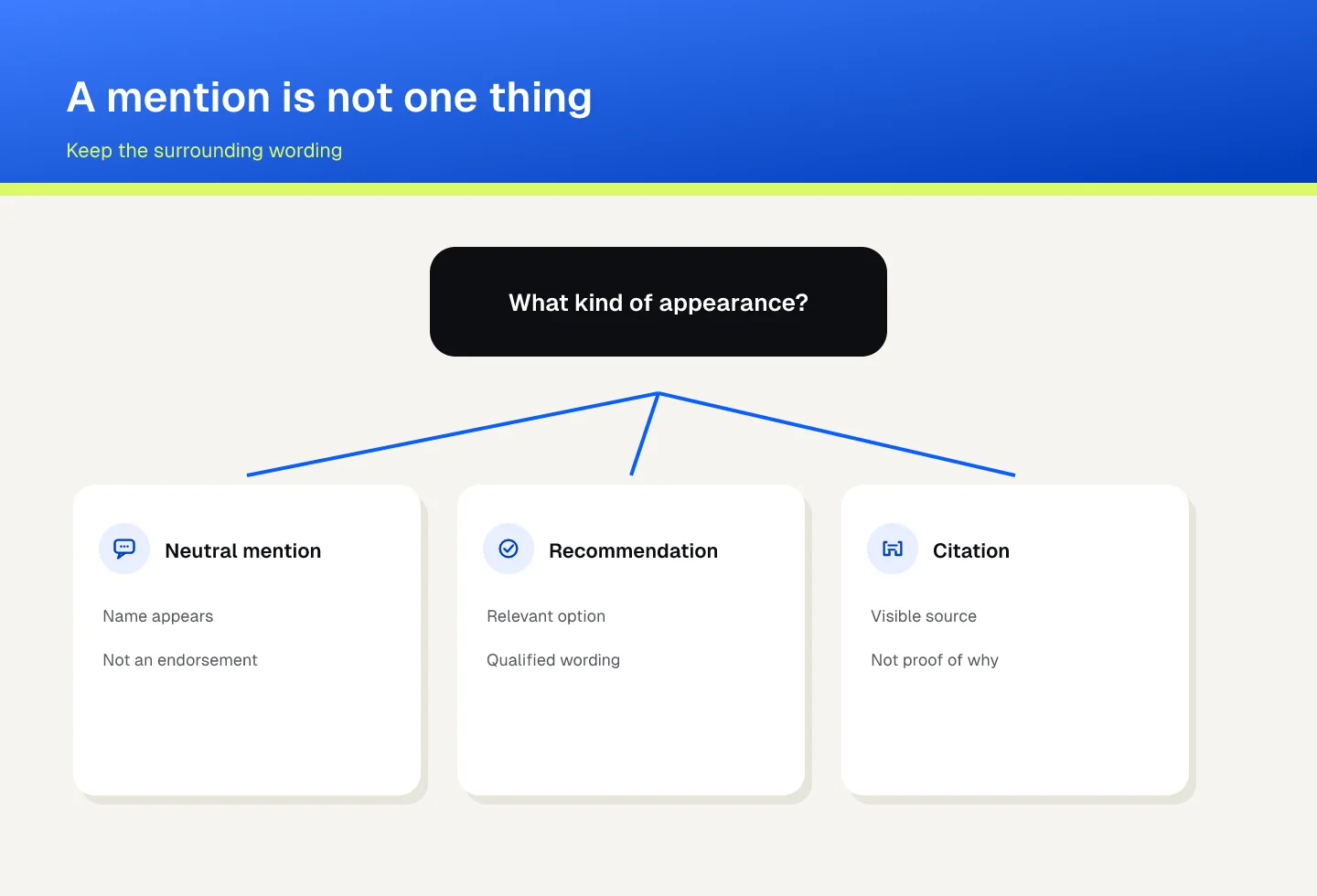
Define the rule before collection. A common definition is an explicit brand or product-name appearance, recorded separately from recommendations, citations and navigational links. Recommendation wording matters more than a binary flag alone. A visible citation does not prove why the source was selected.
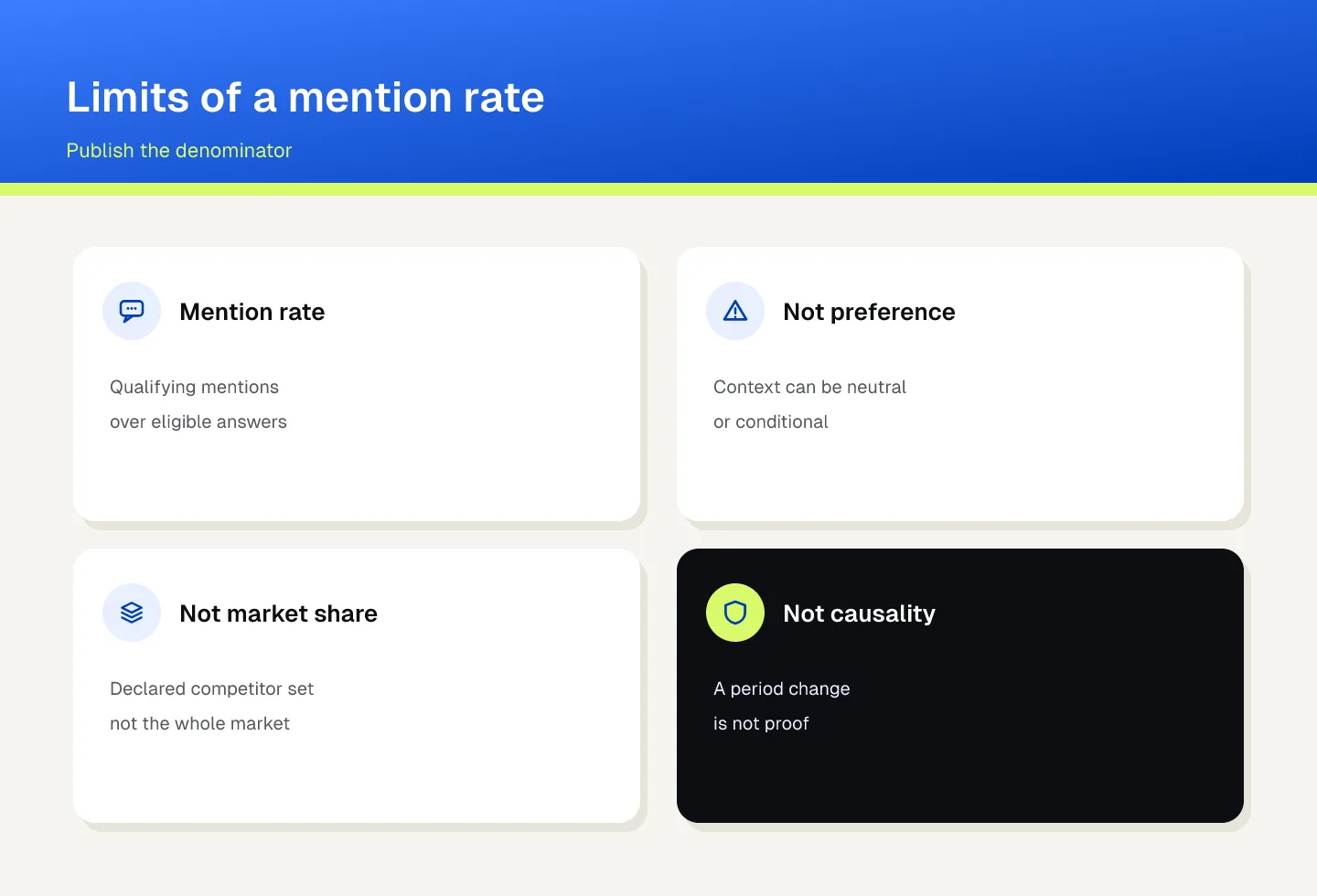
Divide answers containing a qualifying mention by all eligible collected answers in the declared sample. Publish the denominator and explain how errors, refusals or missing answers are handled. A change between two periods does not by itself prove causality.
One search can provide an example, but not a reliable baseline. Generated answers vary, so important questions need repeated observations under documented conditions.
Define the rule before collection. A common definition is an explicit brand or product-name appearance, recorded separately from recommendations, citations and navigational links.
Divide answers containing a qualifying mention by all eligible collected answers in the declared sample. Publish the denominator and explain how errors, refusals or missing answers are handled.
No. The surrounding context may be neutral, negative or conditional. Recommendation context and evidence should be reviewed separately.
This guide is a ViziGEO working method for ChatGPT observations. It does not claim access to private model rankings. Related measurement rules are in the methodology.
Open ViziGEO and review a documented sample of questions, mentions, recommendations and citations. The audit records what was observed. It does not guarantee a mention, a citation or a recommendation.