Research methodology

AI visibility measurement methodology: a transparent method

ViziGEO treats generated answers as variable observations, not fixed rankings. This methodology defines how a credible prompt panel, repeated sampling and evidence register should work.

3 min read

Brand illustration for the AI visibility measurement methodology, with abstract interface shapes and no text.

Key takeaways

  • Freeze prompt wording, intent, language, market and inclusion rules before collection.
  • Store the date, engine, model or interface, run status and parsing version for every eligible observation.
  • Repeat each approved combination so variability is visible.
  • Use published denominators. Do not collapse results into an unexplained score.
  • A visibility change does not by itself prove revenue impact or causation.
Contents

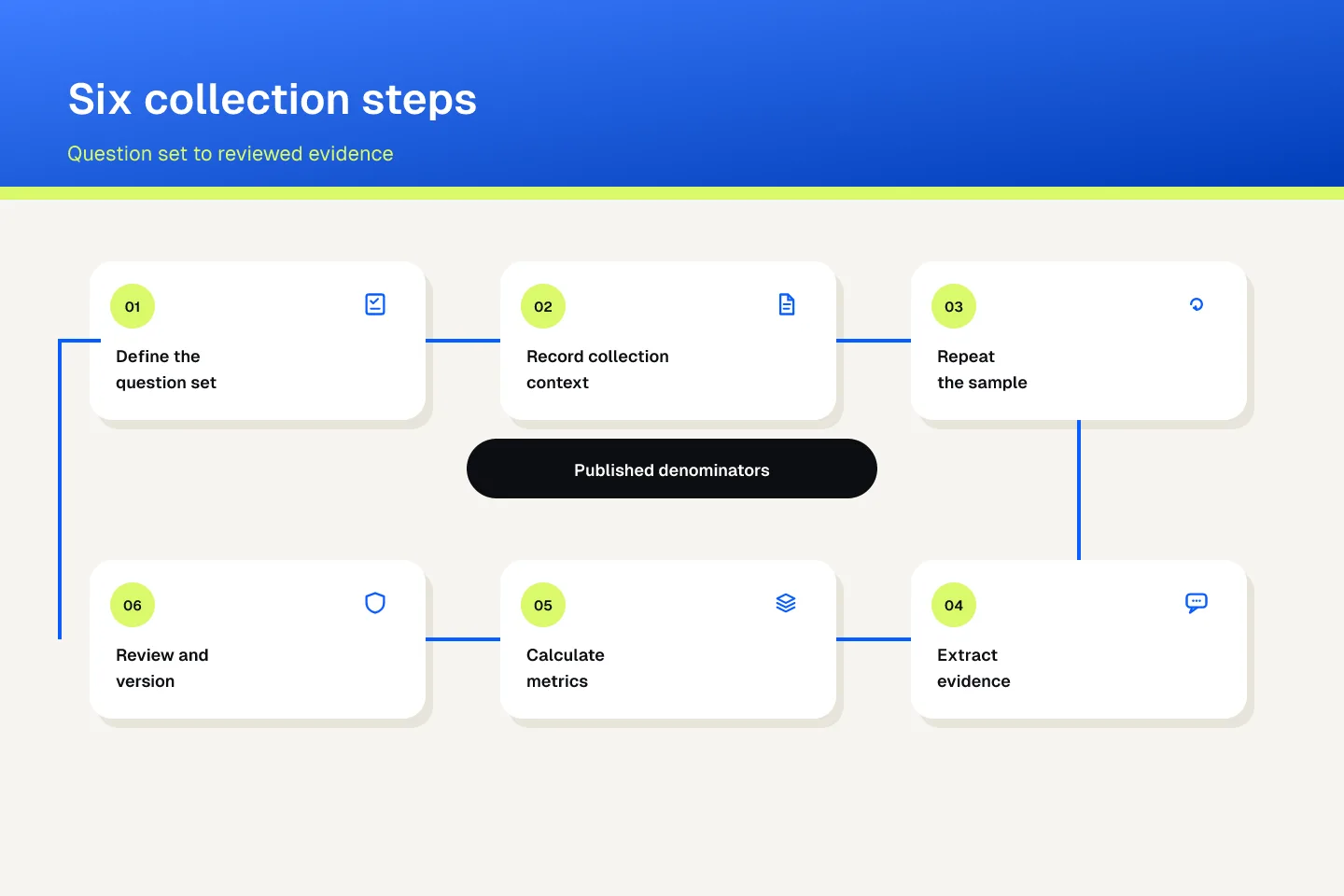
Six steps from question set to reviewed evidence

  1. Define the question set. Freeze prompt wording, intent class, language, market and inclusion rules before collection begins.
  2. Record the collection context. Store the date, engine, model or interface, run status and parsing version for every eligible observation.
  3. Repeat the sample. Run each approved combination multiple times across the declared window to expose answer variability.
  4. Extract observable evidence. Identify brand mentions, ordering, recommendation context, cited URLs and cited domains.
  5. Calculate transparent metrics. Use published denominators and formulas instead of collapsing results into an unexplained score.
  6. Review and version. Quality-check classifications, preserve corrections and publish material methodology changes.
A six-step loop from defining the question set through recording context, repeating the sample, extracting evidence, calculating metrics and reviewing the version.
Every reported rate needs a visible numerator, denominator and eligibility rule.

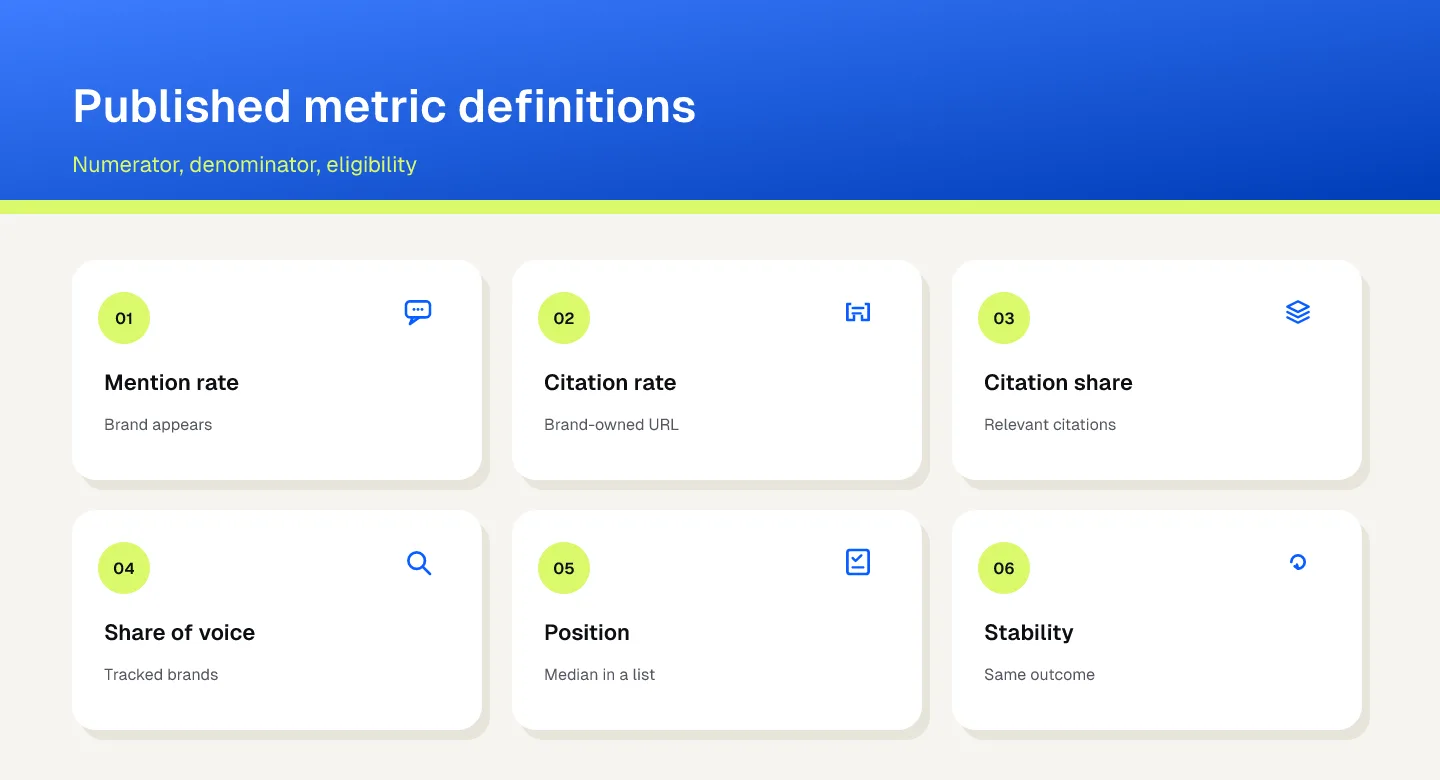
Published metric definitions

MetricDefinition
Mention rateEligible runs where the brand appears, divided by all eligible runs.
Citation rateEligible runs citing a brand-owned URL, divided by all eligible runs.
Citation shareBrand-owned citations, divided by all relevant citations in the measured set.
Competitive share of voiceTracked-brand mentions, divided by all mentions of tracked brands.
Recommendation positionMedian ordinal position when the brand appears in a list.
StabilityRepeated runs with the same presence or absence outcome, divided by repeated eligible runs.
Formulas used in this methodology
Six cards naming mention rate, citation rate, citation share, share of voice, recommendation position and stability.
The formulas stay visible. They are not collapsed into an unexplained score.

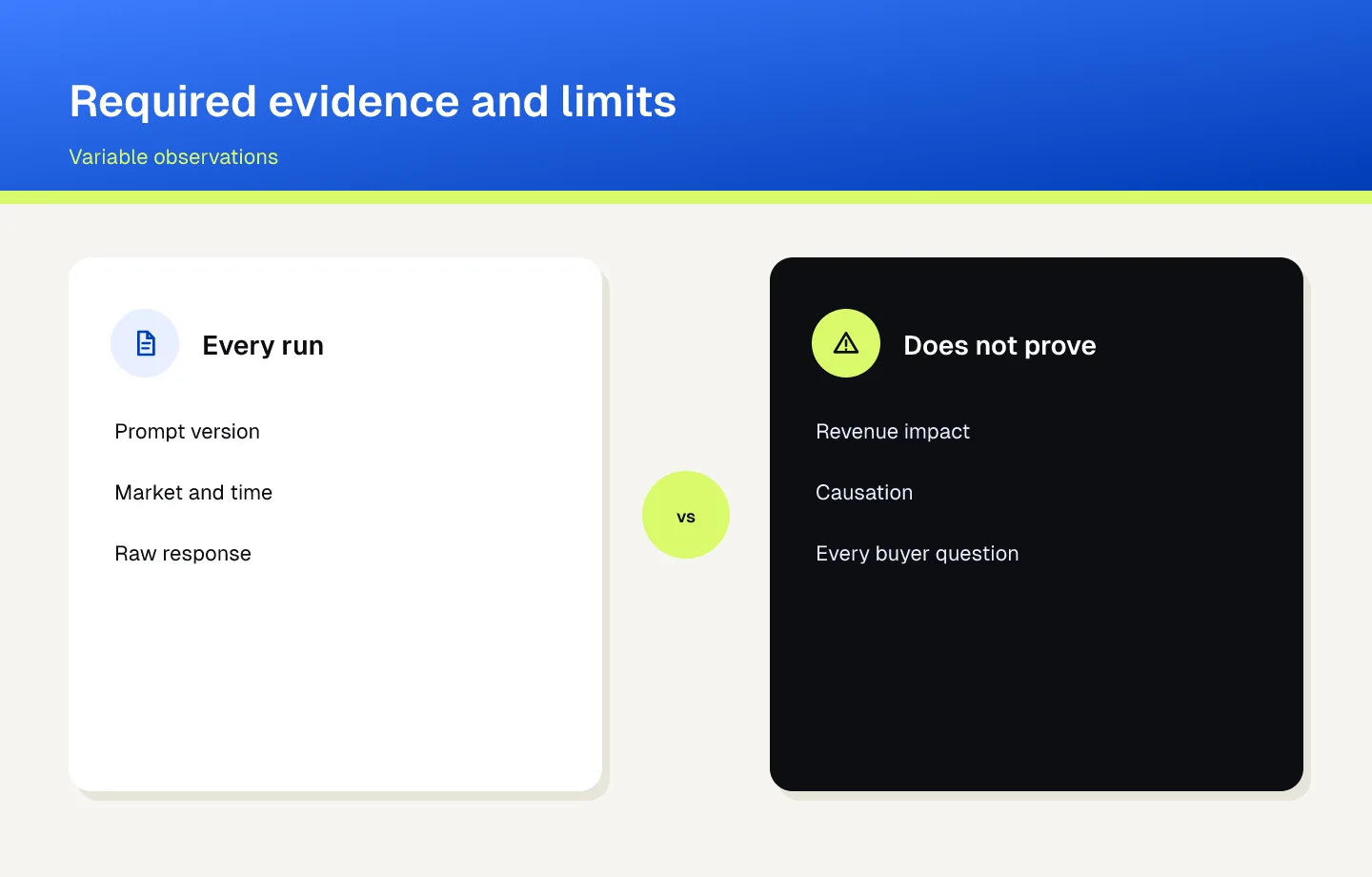
Required evidence for every run

  • Prompt version and intent class.
  • Language, market and timestamp.
  • Engine plus model or interface when available.
  • Raw response in access-controlled evidence storage.
  • Mention, ordering, citation and classification output.
  • Run status, parsing version and cost when applicable.

Interpretation limits

  • API output may differ from a consumer AI interface.
  • A selected prompt panel cannot represent every buyer question.
  • Answers can vary by model, interface, location, history and time.
  • A visibility change does not by itself prove revenue impact.
  • A citation and a brand mention can correlate without proving causation.
  • Method changes can break comparisons and must be versioned.
A split between evidence required on every run and limits the method does not claim, including revenue impact and causation.
Generated answers are variable observations. A selected panel cannot stand in for every buyer question.

Frequently asked questions

Is this methodology a ranking?

No. ViziGEO treats generated answers as variable observations, not fixed rankings. Results describe a declared panel and window.

Why publish the denominator?

Every reported rate needs a visible numerator, denominator and eligibility rule. An unexplained score hides which runs were eligible.

Does a citation prove causation?

No. A citation and a brand mention can correlate without proving causation.

What if the method changes?

Method changes can break comparisons and must be versioned. Material methodology changes should be published with the result.

Sources

These definitions are the ViziGEO measurement method, versioned with a review date of 26 September 2026. They are not a claim about a provider ranking.

  1. Google: AI features and your website
  2. Google Search Essentials

Start a free AI visibility audit

Open ViziGEO and review a documented sample of questions, mentions, recommendations and citations. The audit records what was observed. It does not guarantee a mention, a citation or a recommendation.