Build an AI visibility strategy that produces reviewable decisions
A practical framework for moving from buyer questions and evidence to a prioritised GEO plan, without confusing observations with guarantees.
ViziGEO Team3 min read
Key takeaways
Define the audience, category, primary market and language before deciding what visibility should mean.
Map discovery, comparison, validation and decision questions a real buyer asks.
Collect repeatable observations of mentions, recommendation context, citations and competitors.
Label assumptions. Do not present hypotheses as facts.
Publishing, outreach and technical change stay owner-approved. They are not automatic outputs.
Contents
What the strategy has to name
An AI visibility strategy is a documented plan for understanding and improving how a brand useful information appears for relevant buyer questions across AI-generated and search experiences. It defines scope, evidence and the approval point.
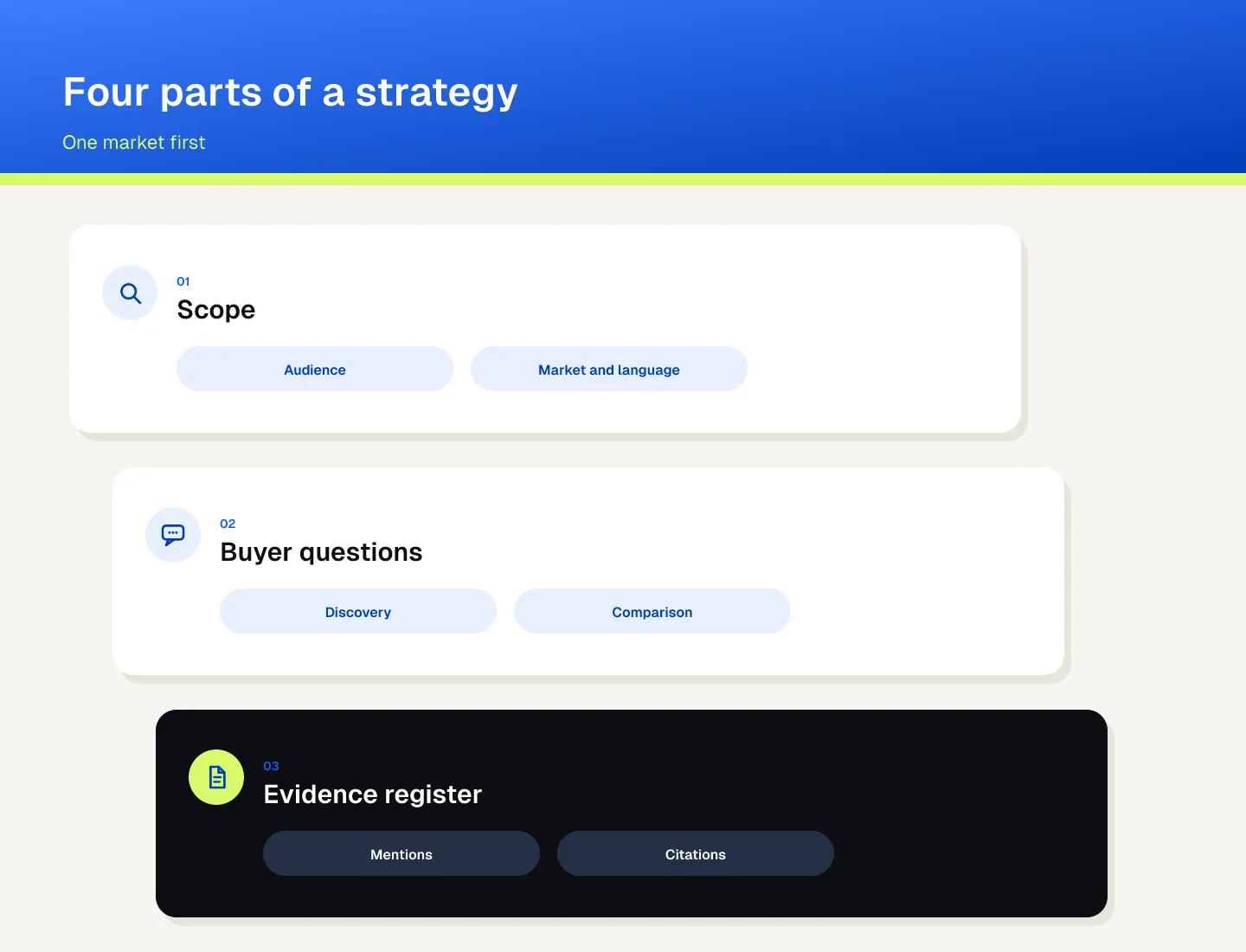
Define the audience, commercial category, primary market and language before deciding what visibility should mean.
Map discovery, comparison, validation and decision questions that a real buyer asks across the journey.
Collect repeatable observations of mentions, recommendation context, citations and competitors under a declared method.
Connect evidence to content, technical, entity and authority hypotheses. Label assumptions instead of presenting them as facts.
Keep publishing, outreach and technical change as explicit owner-approved work, not automatic outputs of analysis.
Start with one market, one language and a focused question panel. A baseline with clear limits is more useful than a broad unvalidated list.
From an agreed panel to the next window
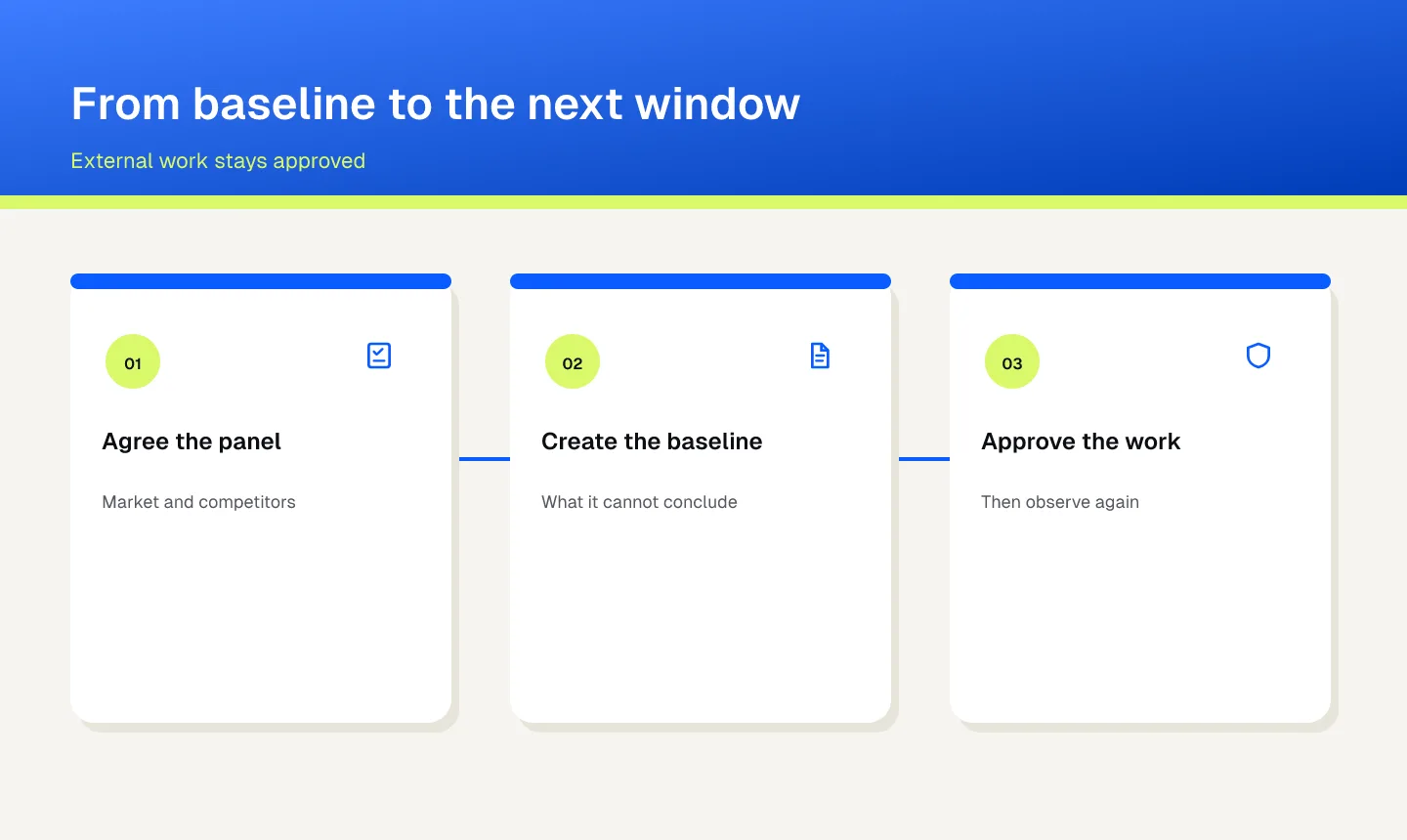
Agree the market, audience, conversion goal, competitor set and a small buyer-question panel.
Create a baseline and evidence register. Identify what can and cannot be concluded from the sample.
Prioritise a small number of content, technical or authority proposals by evidence strength, impact, effort and risk.
Review approved work, record what changed and prepare the next comparable observation window.
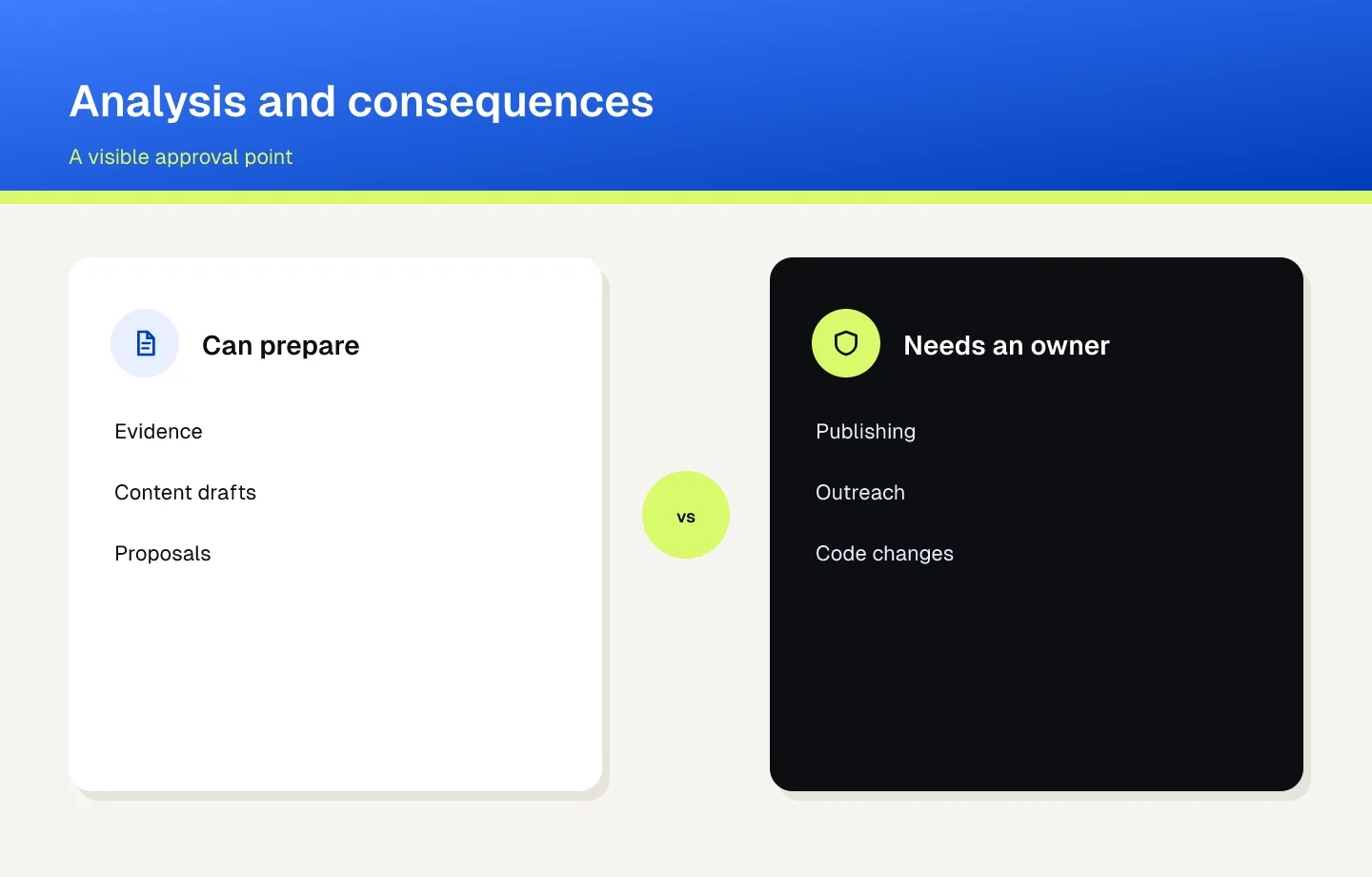
A healthy strategy has a visible approval point. Analysis can prepare a proposal. External consequences stay with a human owner.
What can be prepared, and what needs an owner
Agents can research and prepare evidence-backed proposals. Any external effect, such as publishing, outreach, code changes or deployments, should remain behind a responsible approval step.
Prefer focused improvements over a large set of unvalidated pages.
Record baseline conditions before declaring improvement.
Separate content drafts and proposals from publishing or outreach.
Revisit the question panel as markets and buyer language evolve.
Evidence, drafts and proposals can be prepared. Publishing, outreach and code changes need an owner.
Frequently asked questions
What is an AI visibility strategy?
An AI visibility strategy is a documented plan for understanding and improving how useful brand information appears for relevant buyer questions across AI-generated and search experiences. It defines scope, evidence and approval.
Where should a team start?
Start with one market, one language and a focused question panel. A baseline with clear limits is more valuable than a broad list of unvalidated tasks.
Does an AI visibility strategy replace SEO?
No. It builds on SEO foundations: useful content, accessible pages, consistent entities and credible sources. It adds AI-answer observations, citation context and explicit uncertainty.
Can agents execute the strategy automatically?
Agents can research and prepare evidence-backed proposals. Any external effect, such as publishing, outreach, code changes or deployments, should remain behind a responsible approval step.
Sources
This is a ViziGEO working framework. It does not claim that a strategy produces a mention or a citation.
Open ViziGEO and review a documented sample of questions, mentions, recommendations and citations. The audit records what was observed. It does not guarantee a mention, a citation or a recommendation.