Compare what an AI visibility tool actually measures
A practical framework for comparing AI visibility tools using evidence, repeatability and controlled action.
ViziGEO Team3 min read
Key takeaways
Ask whether the questions, markets, languages and competitors behind every observation are defined.
The tool should record the model, interface, collection date and other context that can change an answer.
A score should trace back to the answer, the mention, the cited URL or the source domain.
The same panel should be observable again, so change is separated from normal variability.
A tool cannot guarantee inclusion in an AI answer.
Contents
Six questions before you trust a score
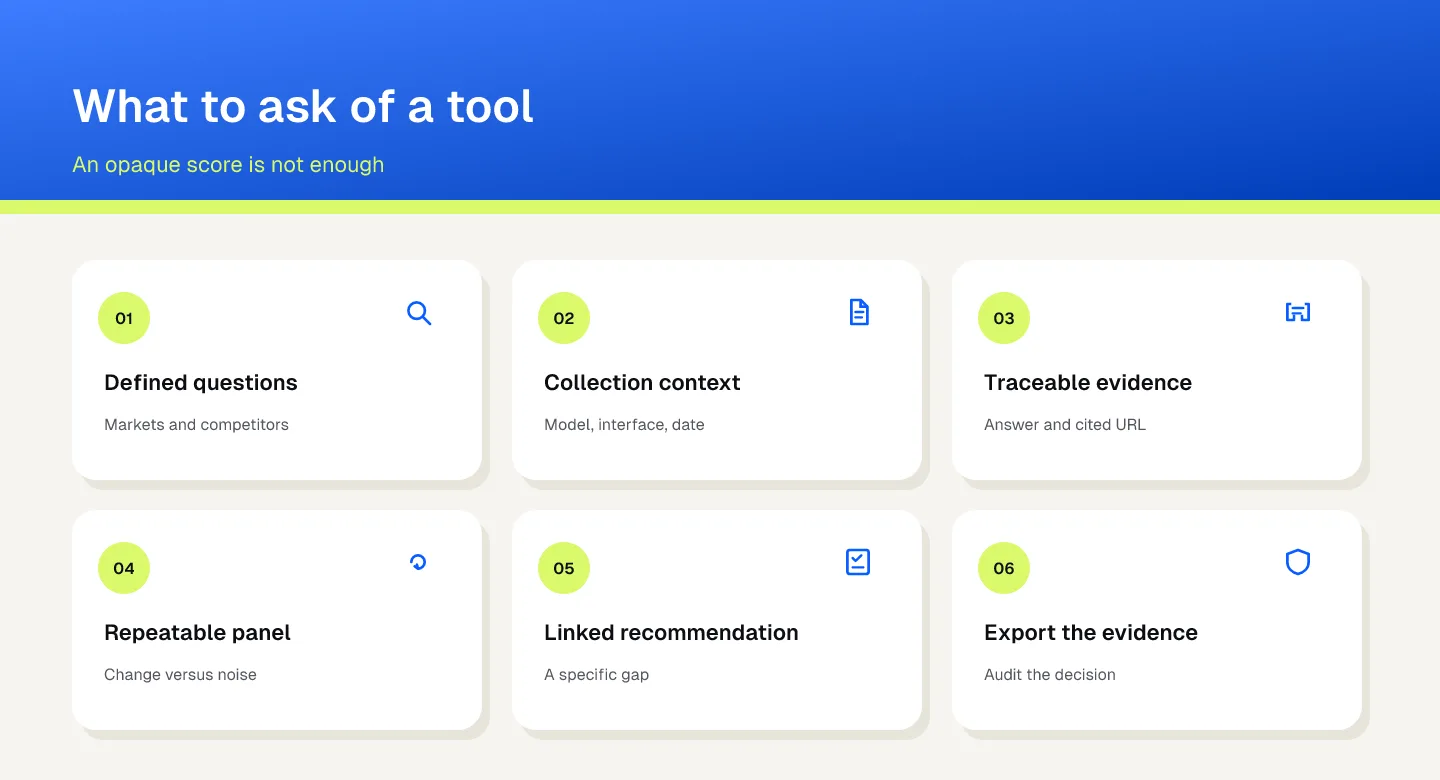
Can you define the questions, markets, languages and competitors behind every observation?
Does the tool record the model, interface, collection date and other context that can change an answer?
Can a score be traced back to the actual answer, brand mention, cited URL or source domain?
Can the same prompt panel be observed again so that change is separated from normal answer variability?
Can a recommendation be linked to a specific gap instead of a generic optimisation checklist?
Can your team export the observations and retain the evidence needed to audit a decision later?
At minimum, the questions, system, date, brand mentions, cited sources and interpretation rules should be visible.
Match the tool to the job
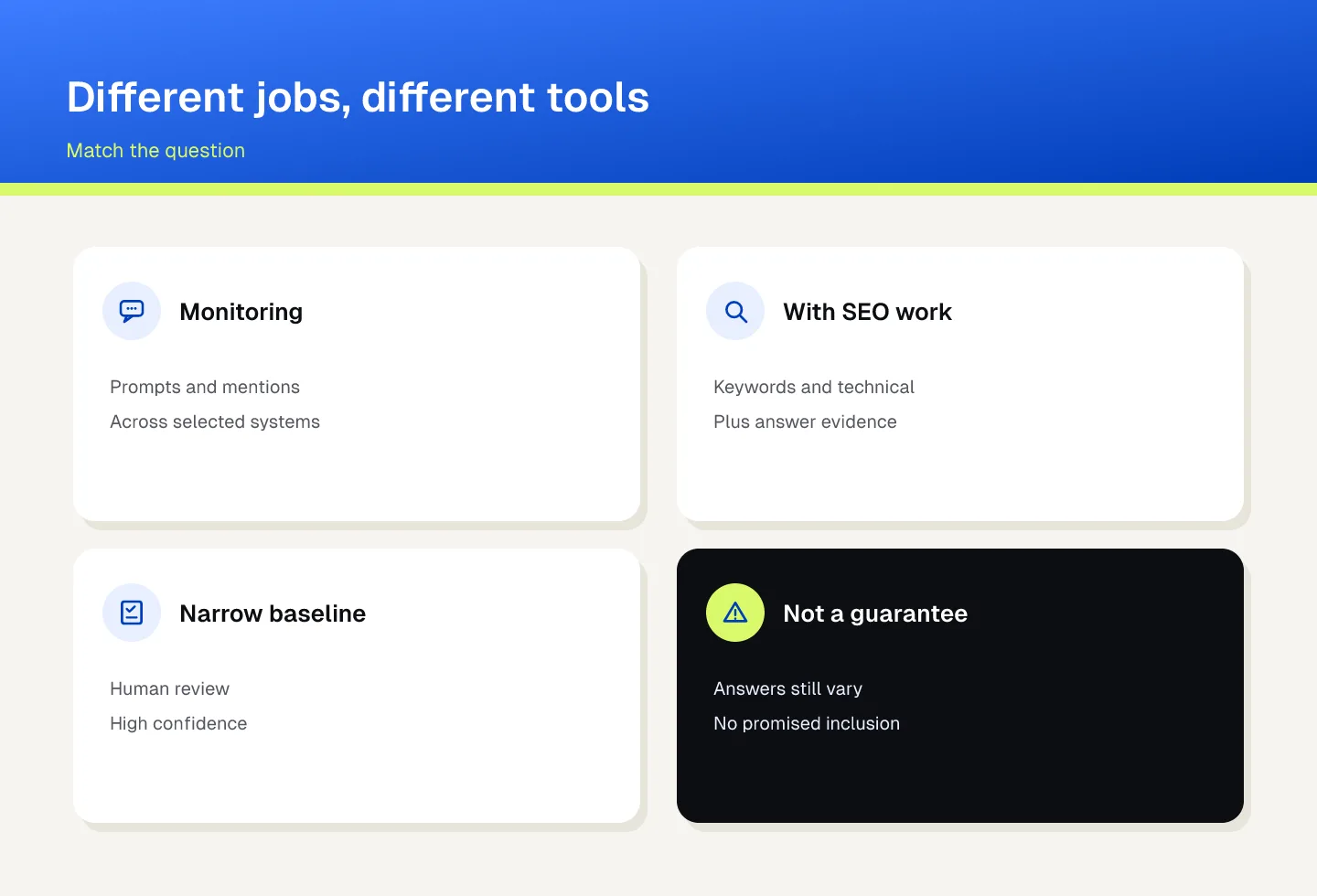
A monitoring workspace is useful when the main question is whether a brand, page or source appears for a defined set of questions.
A tool that sits beside keyword, content and technical SEO workflows is useful when those jobs still need to stay in view.
A narrow, high-confidence baseline is useful when every prompt and answer needs direct human review.
None of these designs guarantees inclusion. Answers can vary by system, date and query wording.
Choose the design that matches the question. A single opaque score is not enough for a high-impact decision.
Start with one market
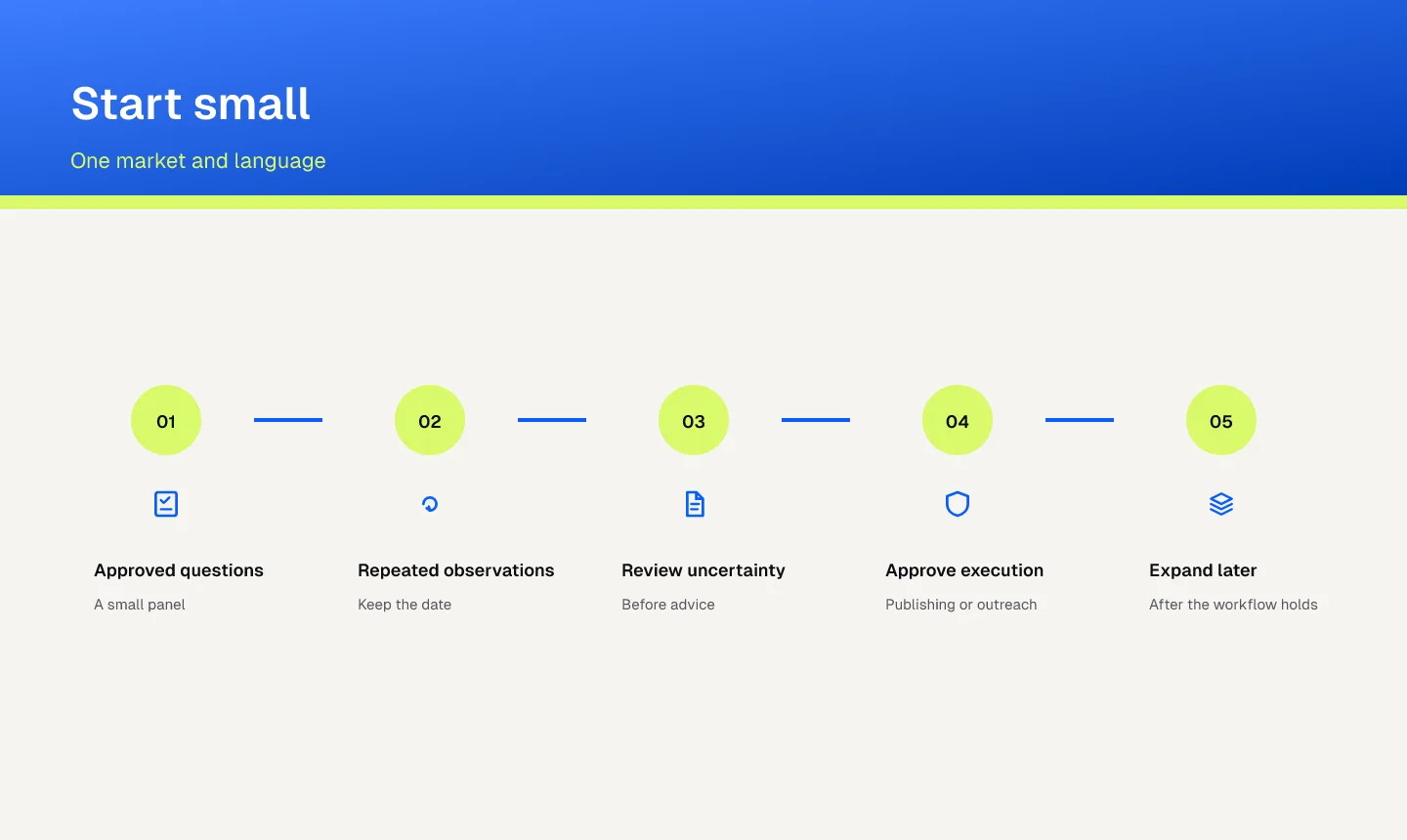
Start with a small approved question panel for one market and language.
Collect repeated observations and retain the answer context, citations and collection date.
Review patterns, gaps and uncertainty before turning a finding into a recommendation.
Require an accountable approval before publishing, outreach or technical execution.
Expand only after the evidence and reporting workflow are reliable.
Establish a reviewable baseline, then expand only after the evidence and reporting workflow are reliable.
Frequently asked questions
What should an AI visibility tool measure?
At minimum, it should make the questions, system, date, brand mentions, cited sources and interpretation rules visible. A single opaque score is not enough to guide a high-impact decision.
Is AI visibility the same as keyword rank tracking?
No. Search rankings and AI answers are different systems. AI visibility research needs prompt-level context, repeated observations and evidence about mentions or sources rather than a promise of one permanent position.
Can a tool guarantee inclusion in AI answers?
No. Answers can vary by system, date, query wording and other factors. A responsible workflow measures observations, identifies gaps and recommends controlled work. It does not guarantee an answer outcome.
How should a team start?
Start with a small approved question panel for one market and language. Establish a reviewable baseline, then expand only after the evidence and reporting workflow are reliable.
Sources
This is a ViziGEO evaluation framework. It does not rank commercial products and it does not claim a provider will include a brand.
Open ViziGEO and review a documented sample of questions, mentions, recommendations and citations. The audit records what was observed. It does not guarantee a mention, a citation or a recommendation.